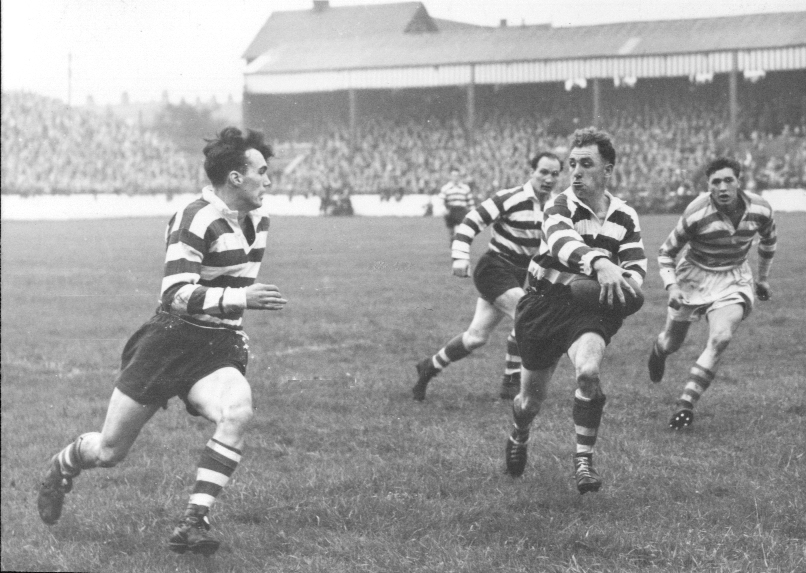
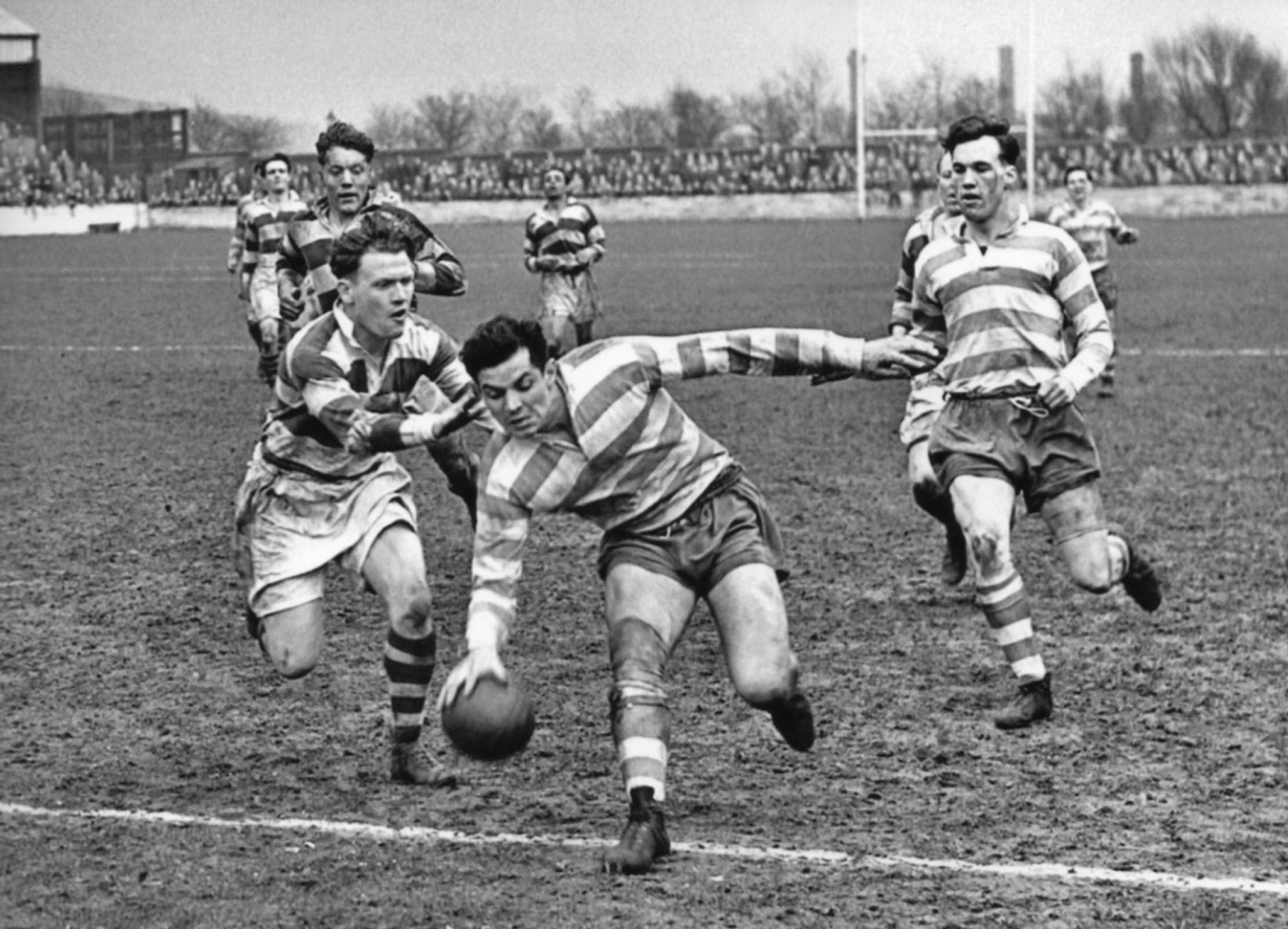
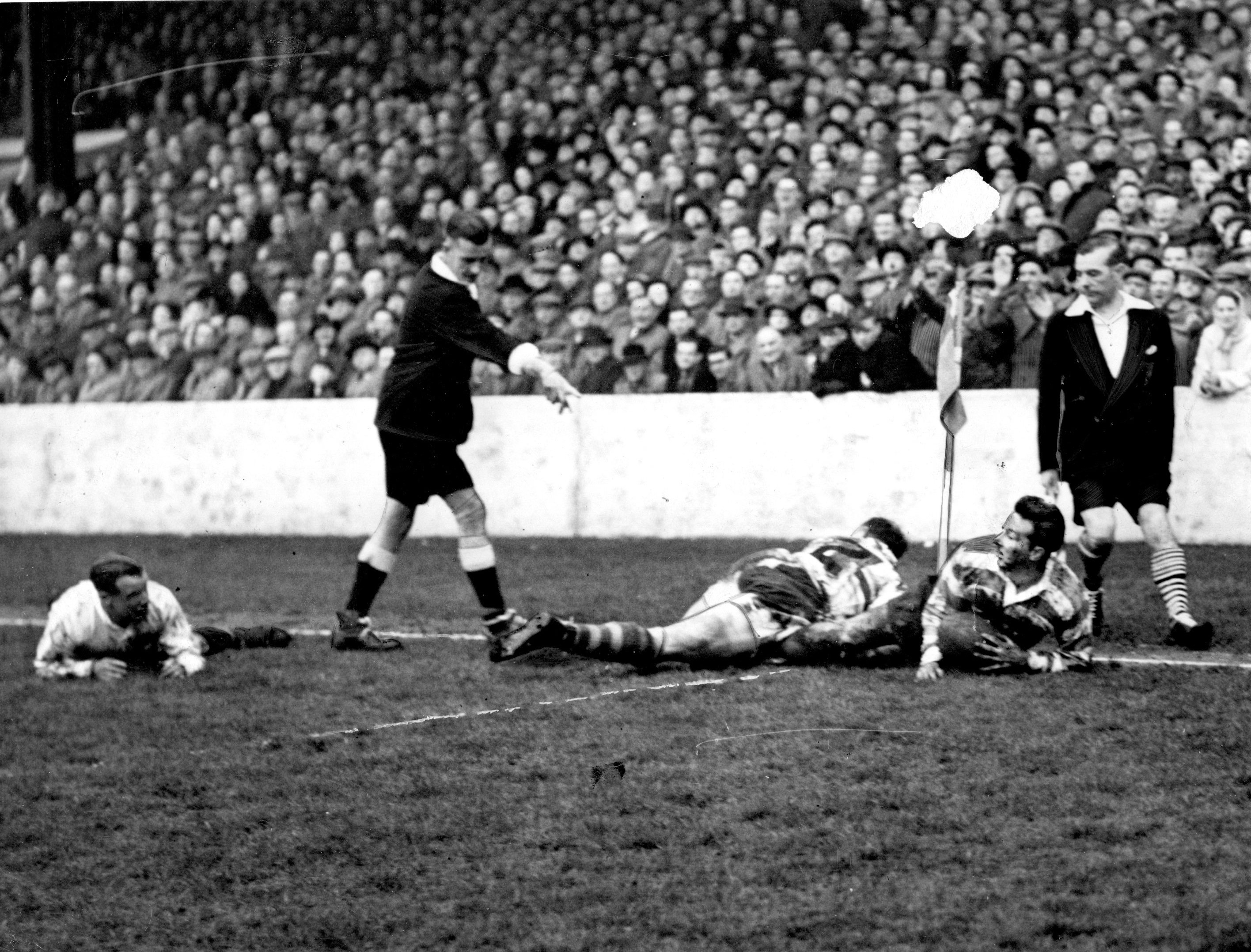
The club was formed in 1876 with the first match played against Stalybridge on October 21. The first home ground was at Sugar Meadow, Glodwick but after two seasons the club moved to a pitch at Clarksfield.
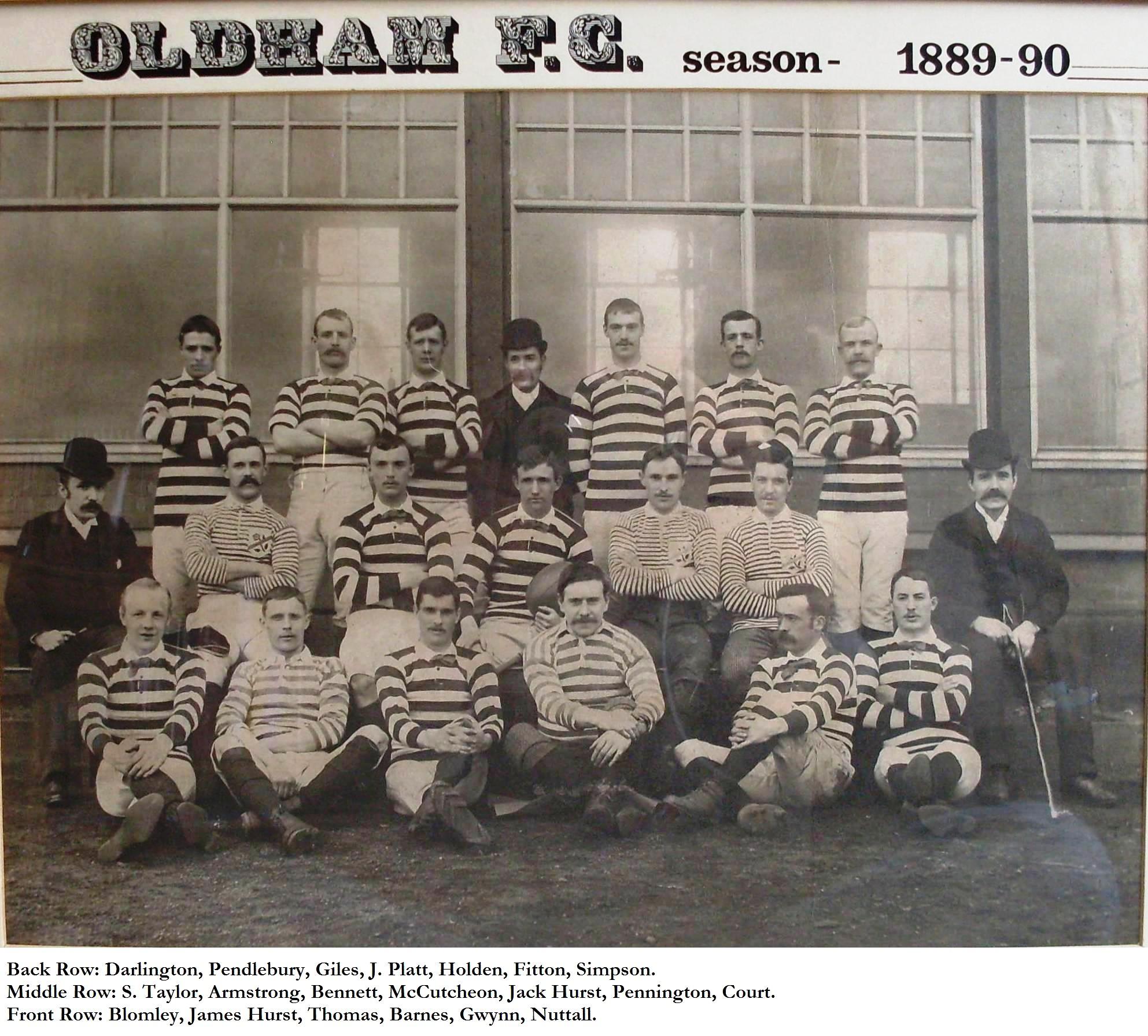
The club colours were black and amber and would remain so until the move to Watersheddings in 1889.
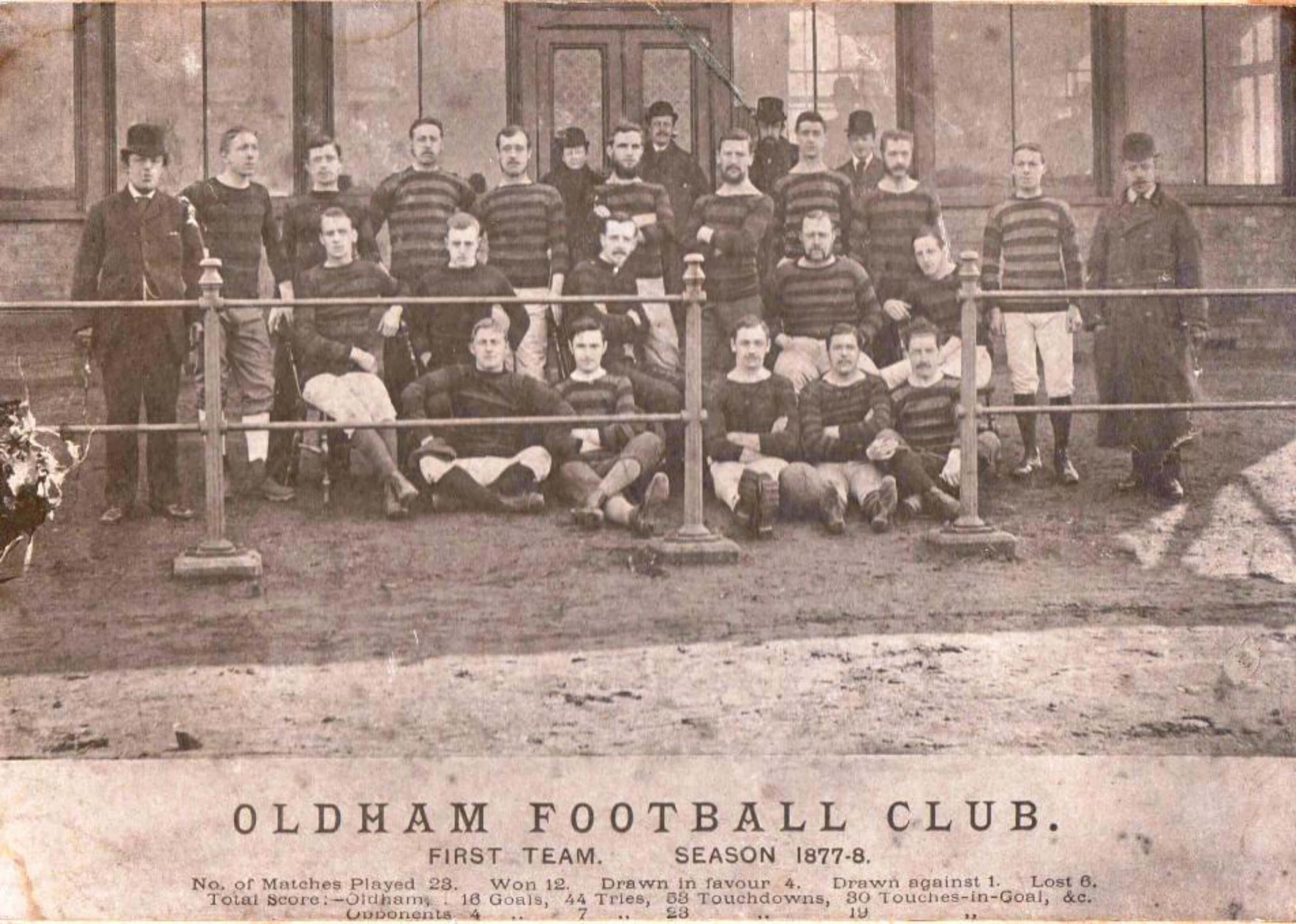
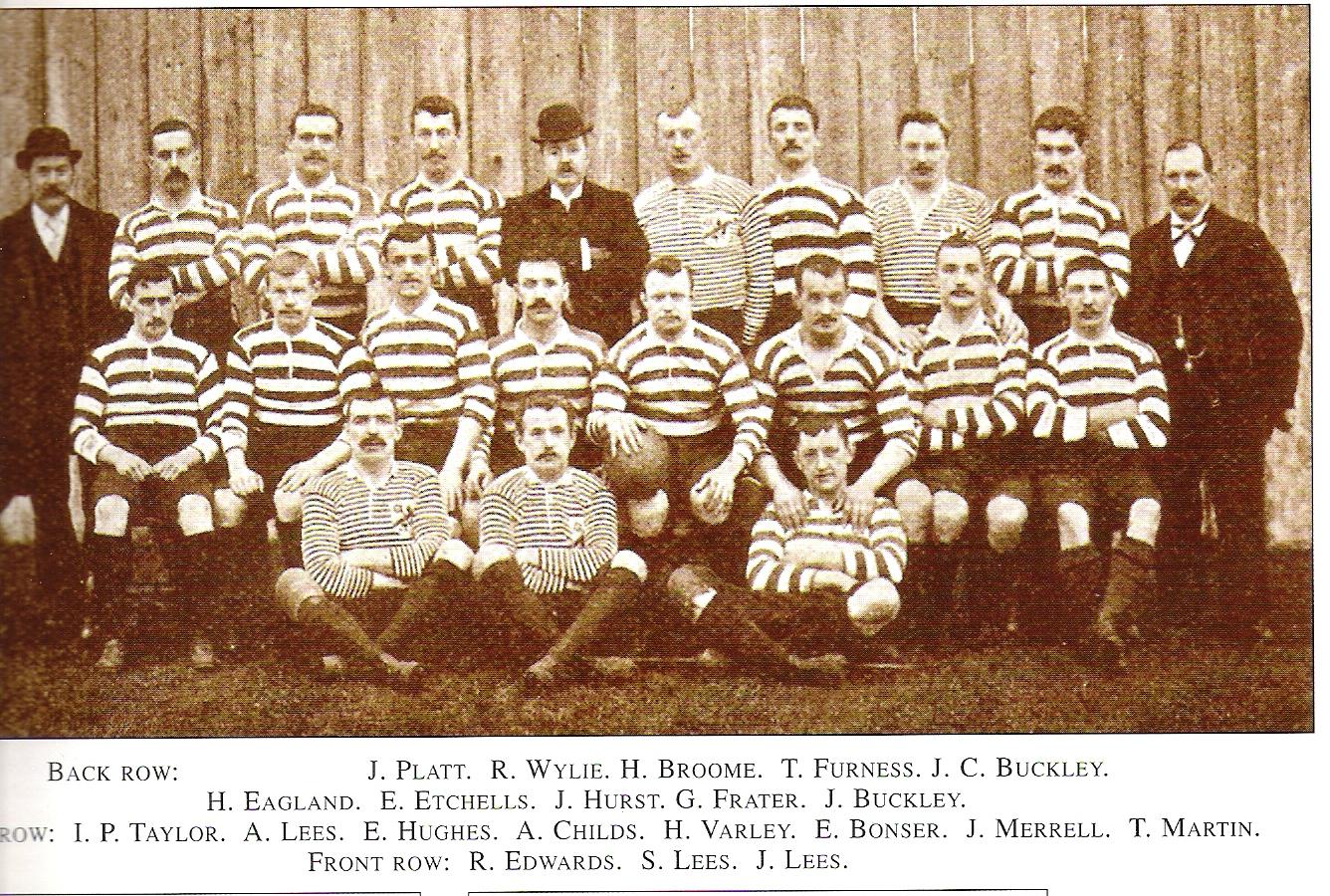
The oldest known team photo of Oldham taken at the end of the 1877-78 season.
1880s
2 events
1880
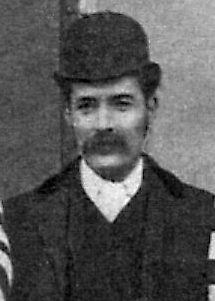
Joseph Platt
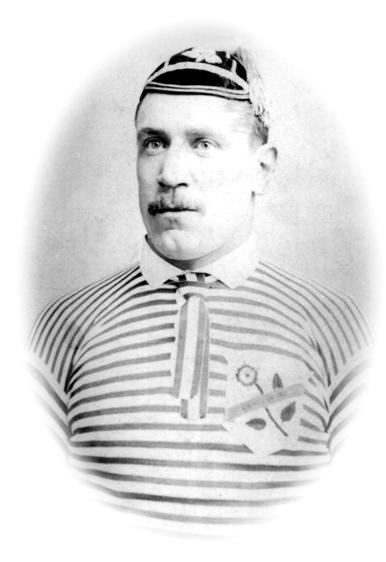
After some early struggles when the club almost disbanded in 1880, the appointment of local businessman Joseph Platt to the committee proved to be a great boost for the club and the game of Rugby League in general
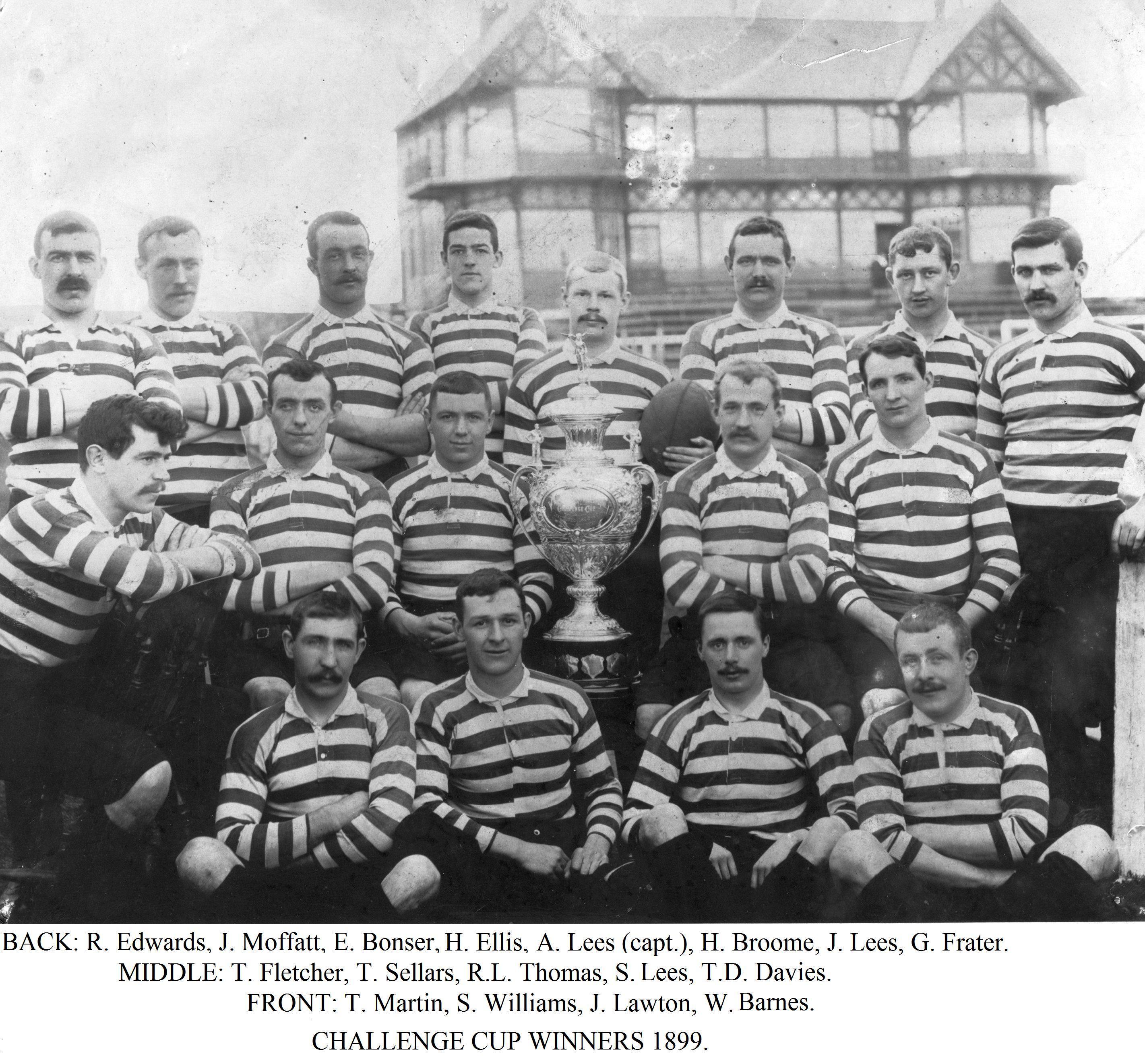
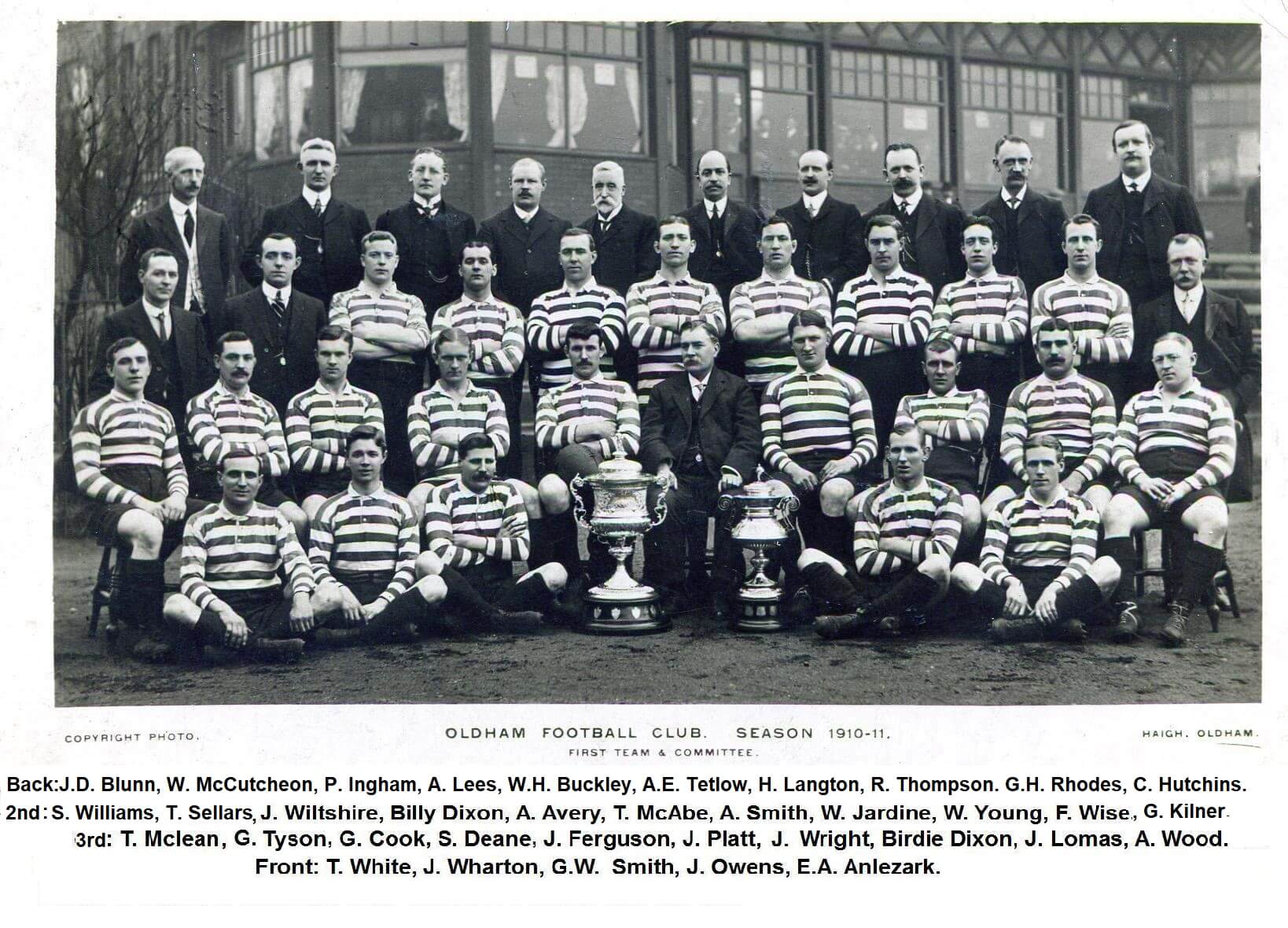
In 1899 Oldham became the first Lancashire winners of the prestigious Rugby League Challenge Cup. Hunslet were again the opposition at Fallowfield, Manchester and the Roughyeds were captained to a 19–9 victory by scrum-half Arthur Lees.
At the conclusion of the 1900-01 season the Oldham winger Sam Williams topped the try scoring chart for the third consecutive season. His tallies of 39, 36 and 47 made him the stand out three-quarter of the era.
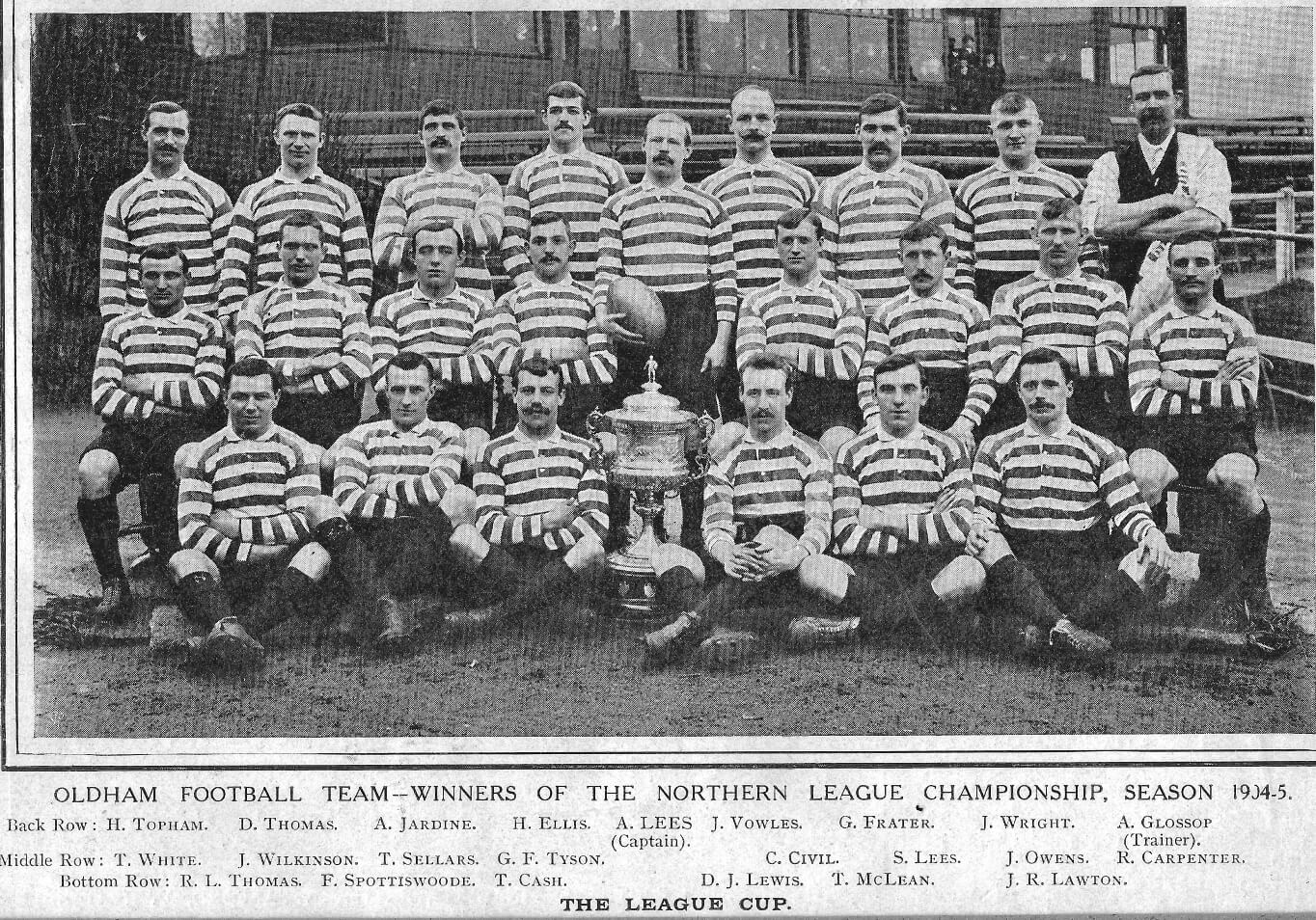
Oldham were crowned League Champions at the end of the 1904-05 season. At the time there was a two division set up and the Roughyeds finished top of the table three points clear of Bradford.
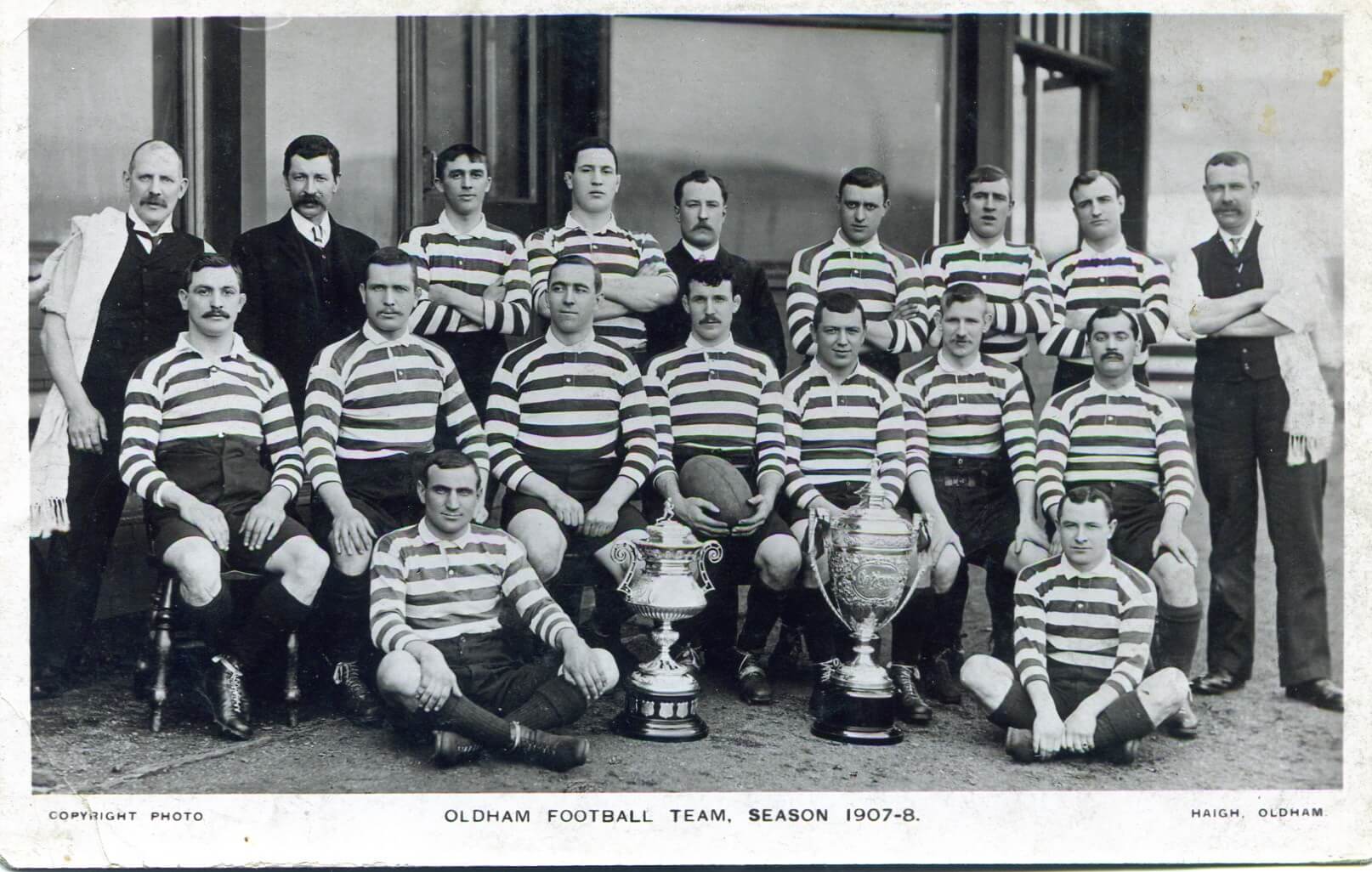
On November 23rd 1907 the New Zealand All Golds were the first touring team to play in Oldham. The Roughyeds triumphed 8 - 7 and a week later won the Lancashire Cup for the first time defeating Broughton Rangers 16–9 at Rochdale.
On October 31st 1908 Oldham's young winger James Miller scored an amazing seven tries on his first team debut at Barry in South Wales. 115 years later in 2023 the record still stands!
Oldham had three players selected for the 1914 tour: Alf Wood, Billy Hall and Dave Holland. All three played in the famous Rorkes Drift test when the injury depleted Lions pulled off an amazing victory in the third test at the Sydney Cricket Ground to win the series 2–1.
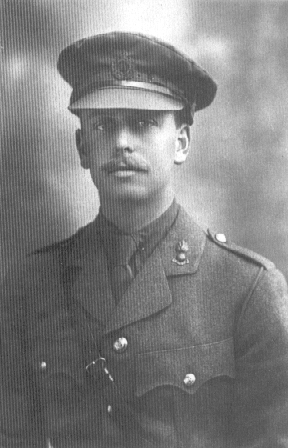
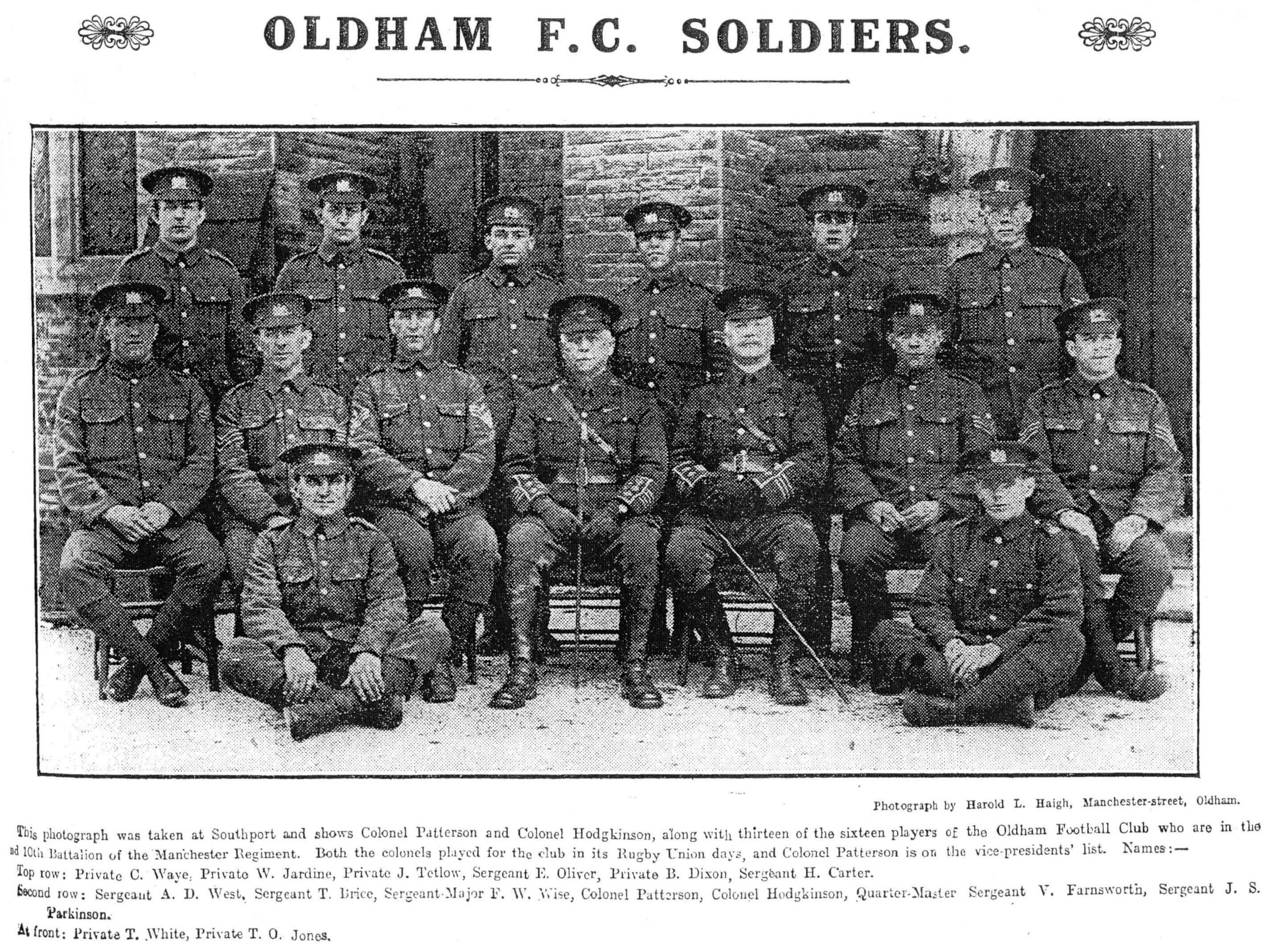
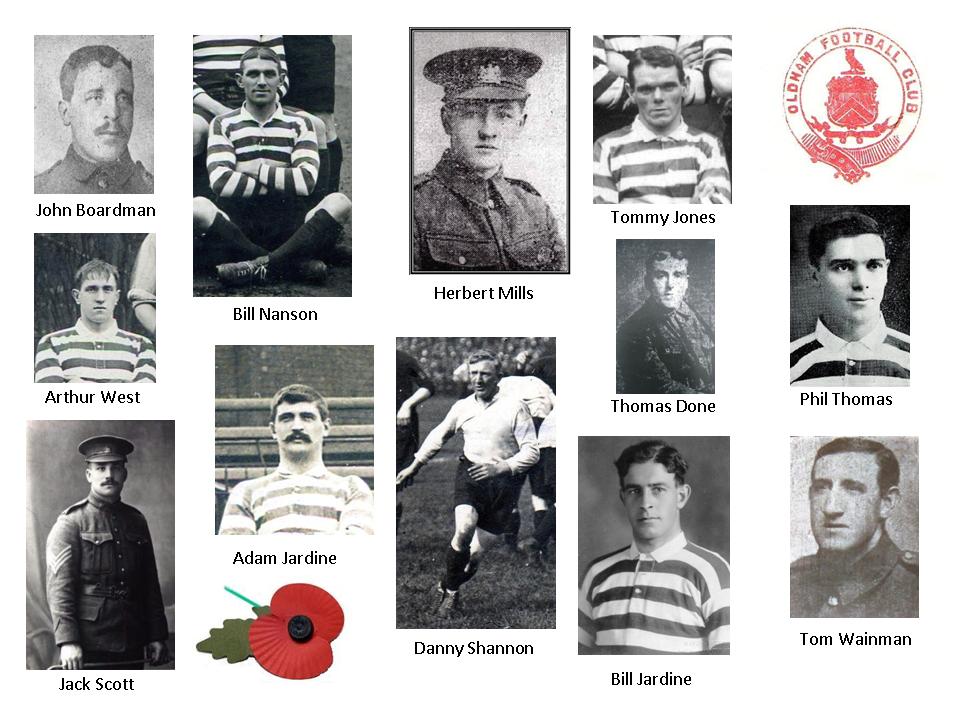
The club resumed with a 'friendly' fixture against Rochdale on Christmas Day 1918. The War had taken its toll and the following players — who at some time had pulled on the red and white jersey — were lost in the conflict: Phil Thomas, Bill Nanson, Danny Shannon, Jack Scott, John Boardman, Arthur West, Tom Wainman, Billy Jardine, Adam Jardine, Thomas Done, Tommy Jones and Herbert Mills.
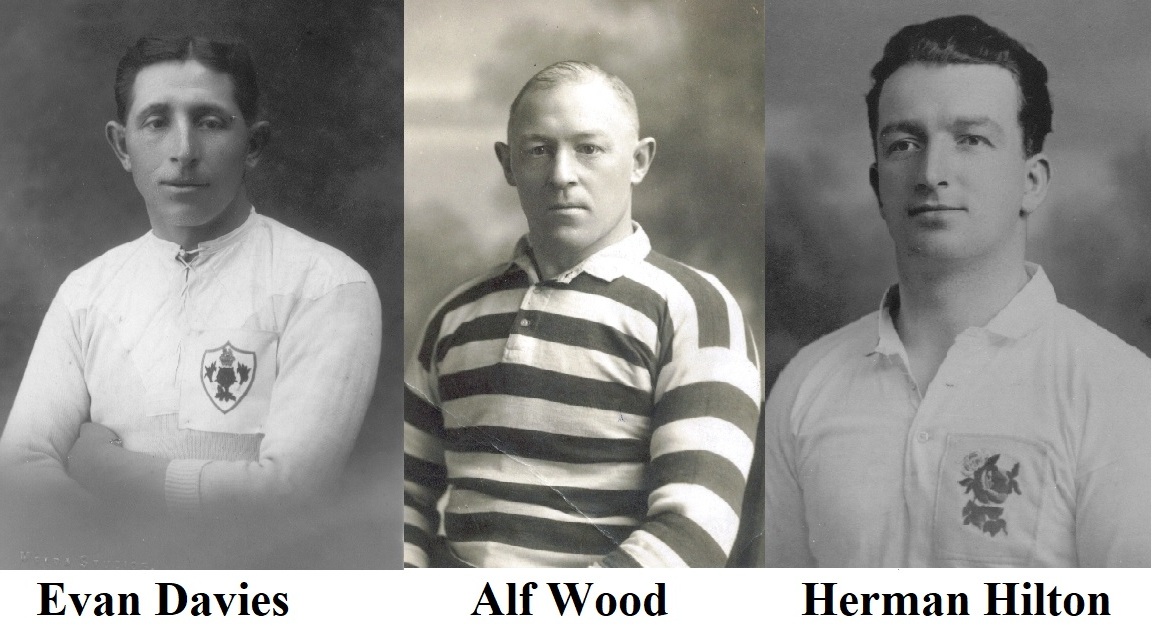
Three Oldham players were selected to tour in 1920: Herman Hilton, Evan Davies and once again Alf Wood who — aged 36 — is the oldest player to be so selected.
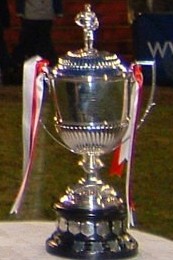
At the end of the 1920-21 season the “Infirmaries Cup” was contested for the first time between Oldham and Rochdale. The trophy was donated by A.J. Law who was the MP for Rochdale with the receipts from the game to be split between the infirmaries in the two towns.
After a 0 - 0 draw at the Athletic Grounds on May 7th 1921, Oldham became the first recipients by winning the replay 12 - 2 at Watersheddings on May 13th. After this first staging of the event the match was switched to be a pre or early season fixture and from 1949 the trophy was renamed the Law Cup after the original benefactor.
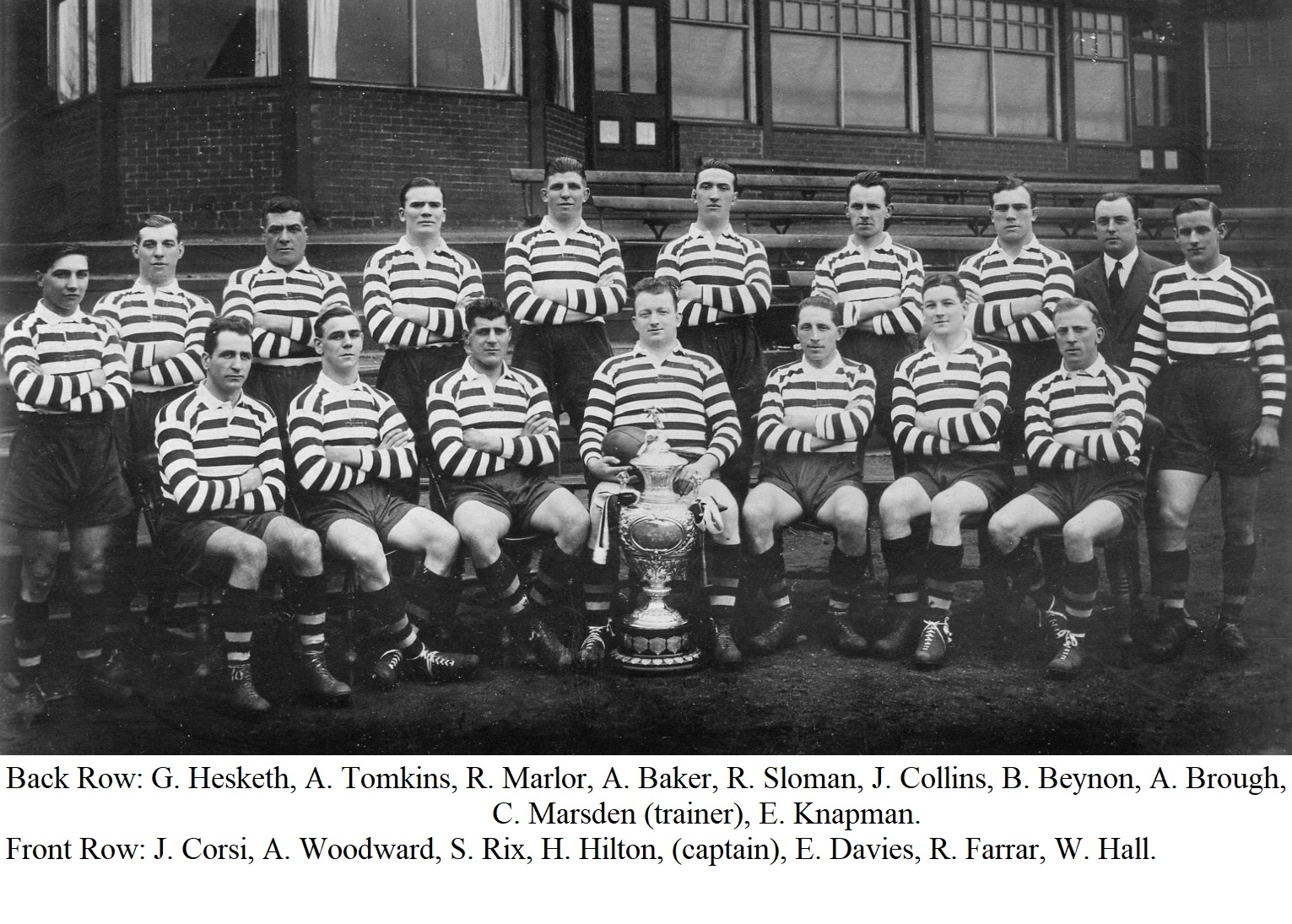
After losing to Wigan in 1924 then defeating Hull KR in 1925, Oldham lost to Swinton in 1926 but gained revenge in 1927 when the Lions were defeated at Wigan with Tom Holliday scoring a hat-trick of tries.
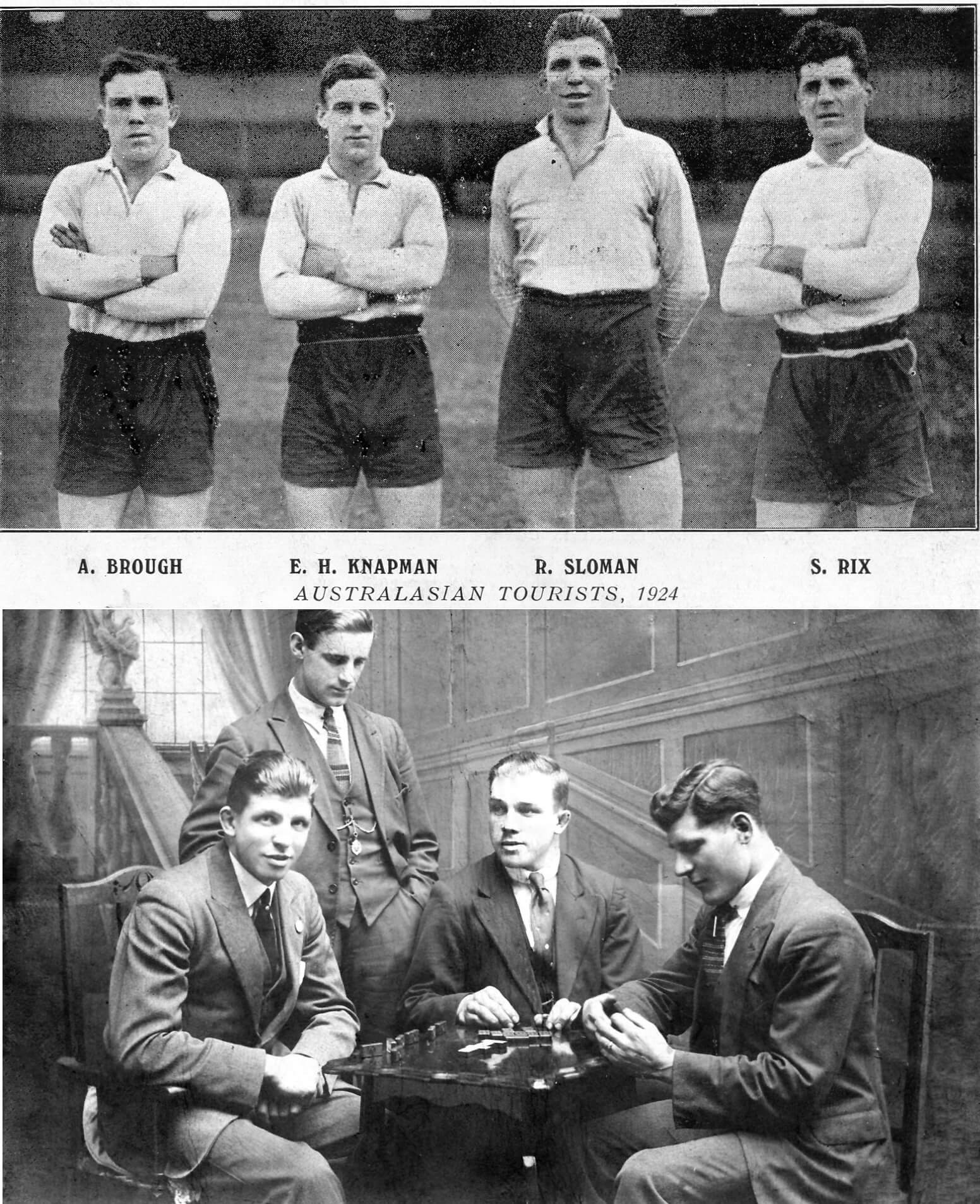
Oldham captain, Bob Sloman was again picked for the Australian and New Zealand tour. Although he was the only player selected Mr. G.F. (Fred) Hutchins the Oldham official, was joint manager of the trip.
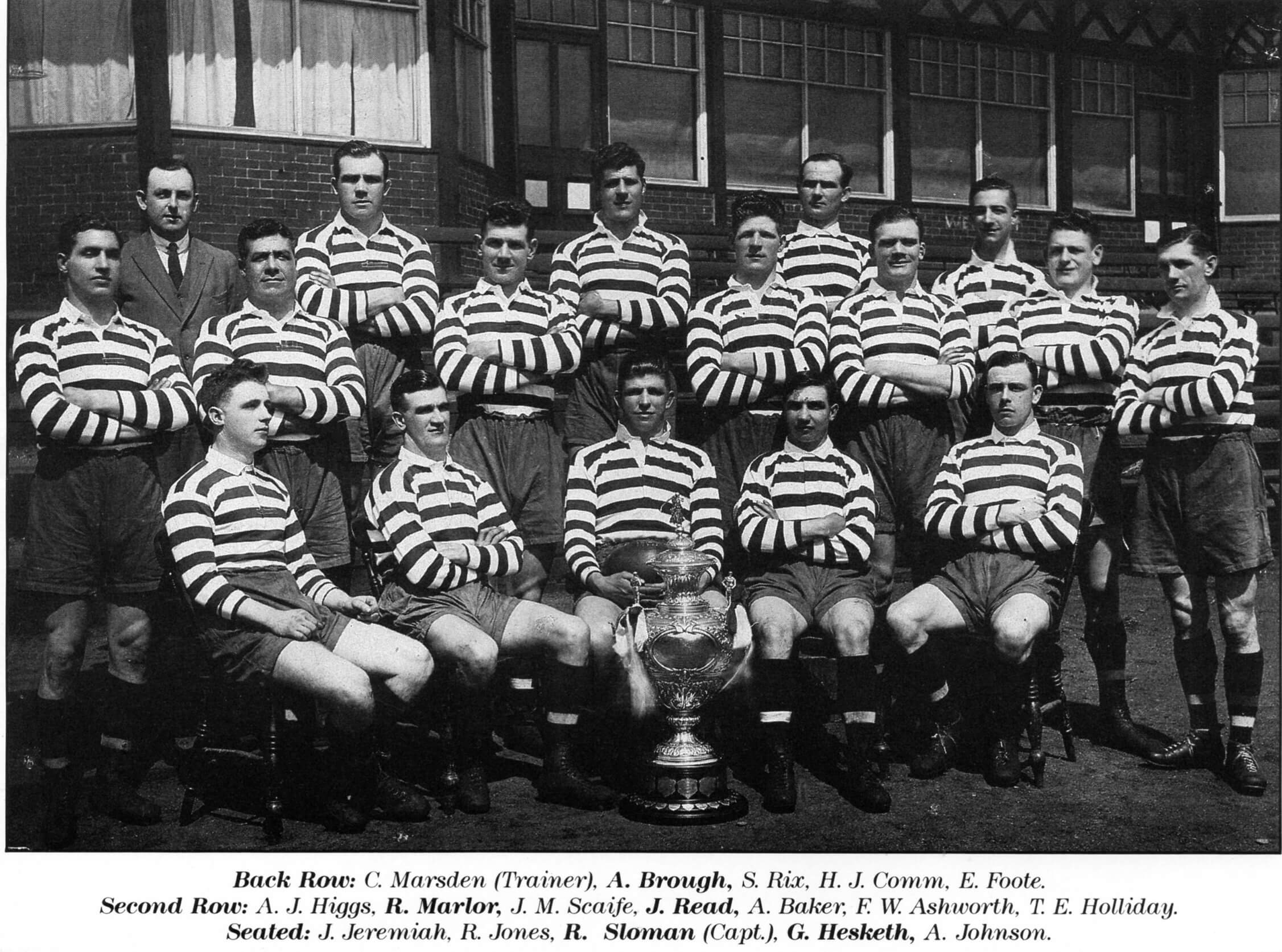
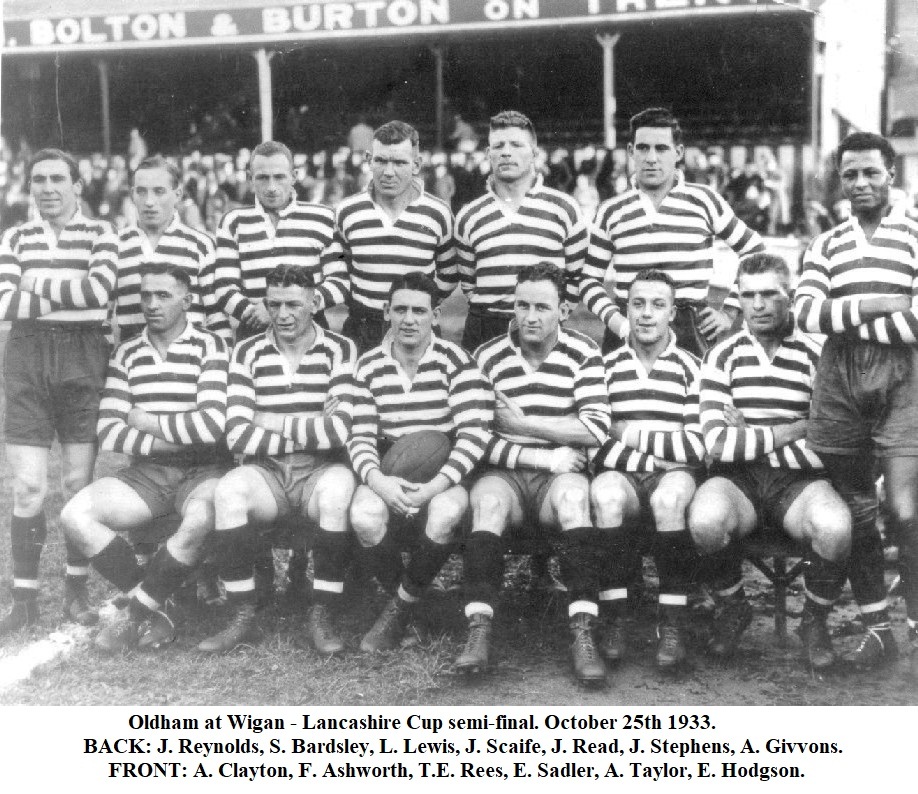
Although the 1930s were not the most fruitful times for the club, they won the Lancashire Cup against St Helens Recs in 1933 at Swinton and in the same season reached the semi-final of the Challenge Cup losing out to Widnes again at Station Road.
1933 Lancashire Cup Winners - Team photo for the semi final victory at Wigan.
1939
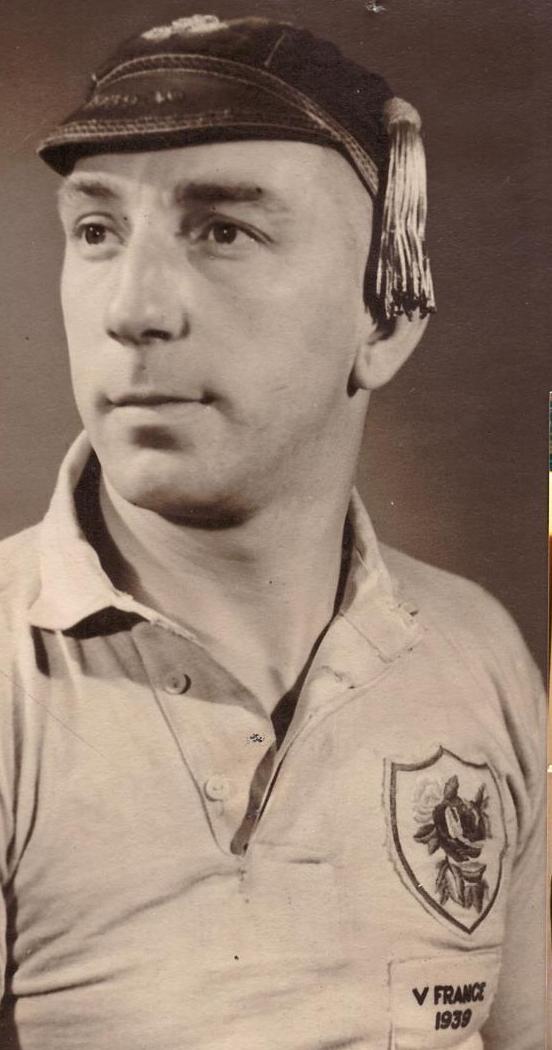
International recognition for Edgar Brooks
Local born hooker Edgar Brooks was selected for England for the 1939 international against France. Edgar, along with teammate Alex Givvons were strong contenders for the 1940 tour that was cancelled due to World War 2.
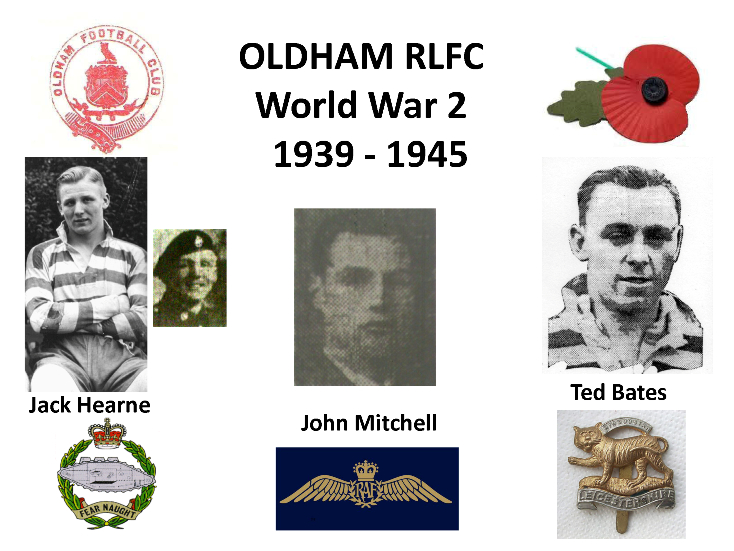
By the time World War 2 had ended, three Oldham players had lost their lives in the conflict Jack Hearne (Tank Regiment), (John Mitchell RAF) and Ted Bates (Leicestershire Regiment), all in the summer of 1944.
After only playing seven matches of Rugby League, Oldham's towering, Welsh second-row forward Doug Phillips is selected for the 1946 tour. The 'Indomitables' won the ashes with Phillips playing in all three tests against Australia.
The early 1950s - The beginning of the 'great' team.
By the end of the, war torn, 1940s, Oldham had made some shrewd signing. There was an energetic young hooker from the Hunslet area, Jack Keith and the multi-gifted Welsh, loose forward Bryn Goldswain. The '57 champions were being assembled.
The stars continued to come, Young local lads Ken Jackson and Terry O'Grady made an immediate impact in the first team and the mercurial Frank Stirrup was signed from Salford. His half-back partnership with Frank Daley would become the stuff of Watersheddings folklore.
The precocious talent that was Alan Davies was now in the fold along with Bernard Ganley, Charlie Winslade and Sid Little and the rest of the league began to take notice.
By the middle of the decade Oldham were a fine blend of youthful talent like Frank Pitchford, along with Davies and O'Grady all in their early 20s allied to the vast experience that came in the shape of Goldswain, Harry Ogden and the craggy Wiganer, Daley.
The team delighted the crowds with their entertaining brand of rugby but the Lancashire Cup Final and the Championship final were both contested, and lost to Barrow and Warrington respectively.
Frank Pitchford scores Oldham's try in the narrow defeat to Warrington in the 1955 Champinship final at Maine Road.
1956
Success! Lancashire Cup Winners
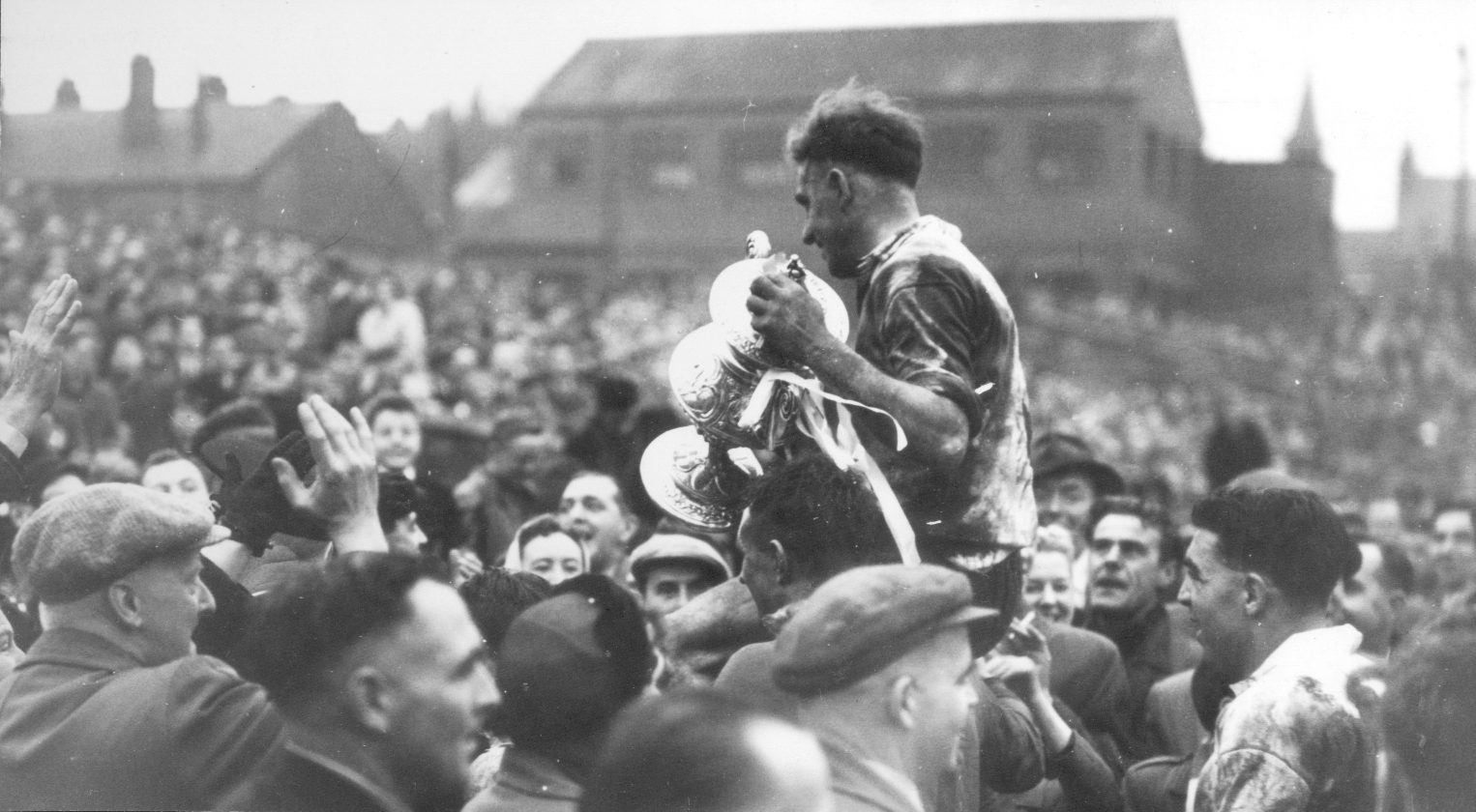
After a 23 year wait, Oldham won a major trophy when St Helens were defeated in the Lancashire Cup Final at Wigan. No one played better in the match than Derek Turner. A forceful, commanding presence in the forwards, Turner turned a good team into a winning one!
Oldham captain, Frank Stirrup is carried shoulder high after the Lancashire Cup Final victory over St Helens.
1957
Champions!
Oldham were crowned Rugby League Champions in a nerve tingling final against Hull FC at Odsal Stadium, Bradford.
Two tries from John Etty plus one from Dennis Ayres with three goals from Bernard Ganley were just enough to defeat the 'Airlie Birds' 15 - 14 in front of a crowd of over 62,000 spectators. It was just reward for the Roughyeds who finished six points clear at the top of the league table playing a brand of fast flowing, entertaining Rugby League. In November, 5 Oldham players (Jackson, Ganley, Davies, Little and Turner) played in the Great Britain team against France at Wigan.
Oldham retained the Lancashire Cup having beaten Wigan in the 1957 final, it was St Helens again who fell to the Roughyeds. However there was disapointment when, after once again finishng clear at the top of the league table, Oldham were defeated by Hull in the play-off semi-final at Watersheddings.
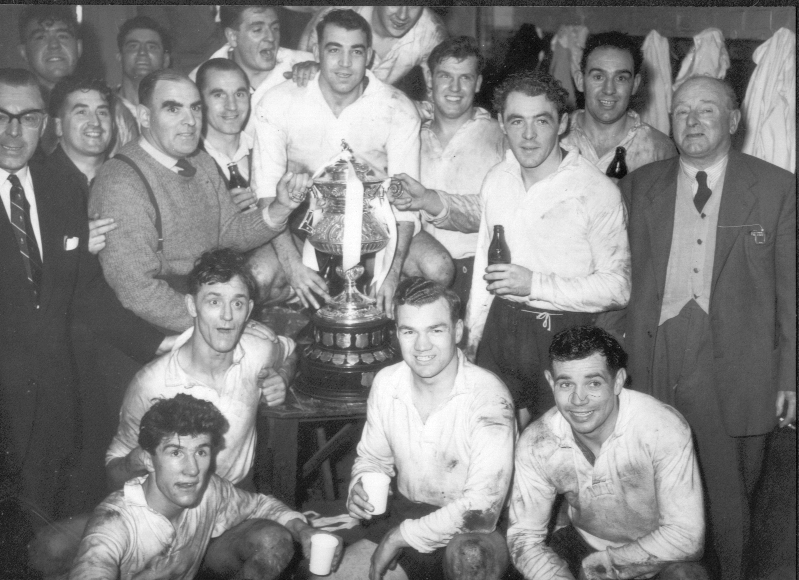
The team celebrate with the Lancashire Cup after defeating St Helens 12 - 2 at Station Road.
1960s
6 events
1960
Semi-final heartbreak
After all of the efforts of the side of the 1950s. It was as the team broke up in the new decade that the Wembley dream was so nearly acheived. A strongly fancied Oldham lost out, once again, to the old enemy Hull FC 12–9 at Swinton. Included in the team was star winger Ike Southward who in just 52 appearances for the Roughyeds scored a remarkable 54 tries.
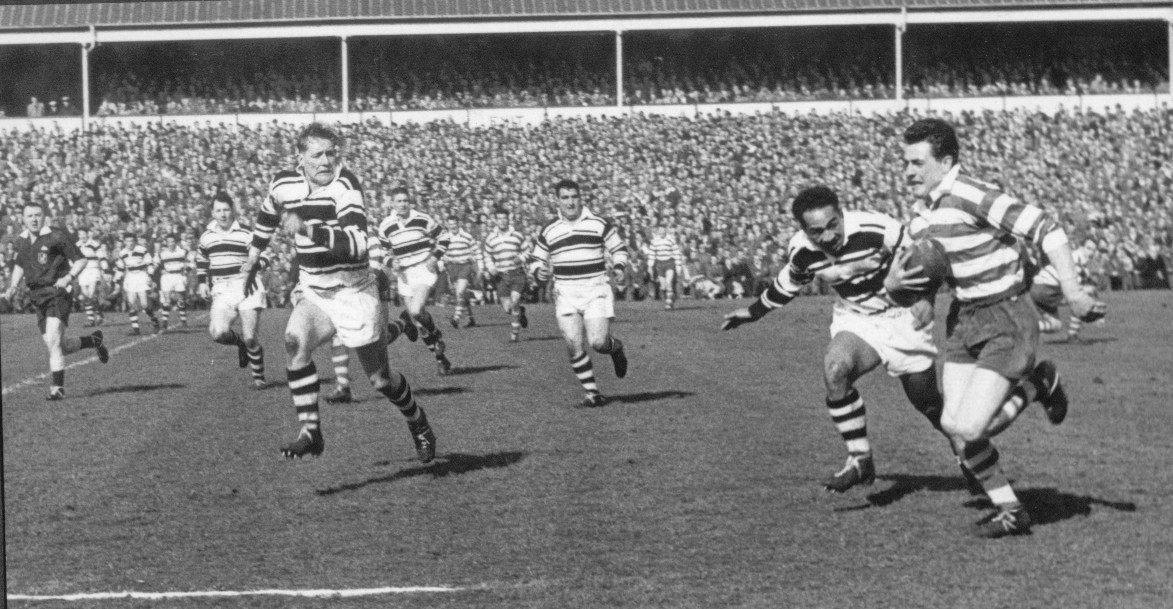
John Noon tries to evade Nan Halafihi and Johnny Whiteley in the Challenge Cup semi-final against Hull.
1962– 1964
Relegation and more semi-final disappointment
For the 1962-63 season a two division system was introduced and though Oldham qualified comfortably for the top tier, a dip in form saw them relegated at the season's end.
Neverthess, they stormed back the following year to easily win the second division title. However, the talking point of the season was the twice replayed Challenge Cup semi-final against Hull Kingston Rovers. After a dramatic late equalising drop goal in the first match at Headingley (5 - 5). Oldham were actually leading the replay at Swinton (17 - 14) when play was abandoned for failing light. The second replay at Huddersfield saw the 'Robins' worthy winners (12 - 2).
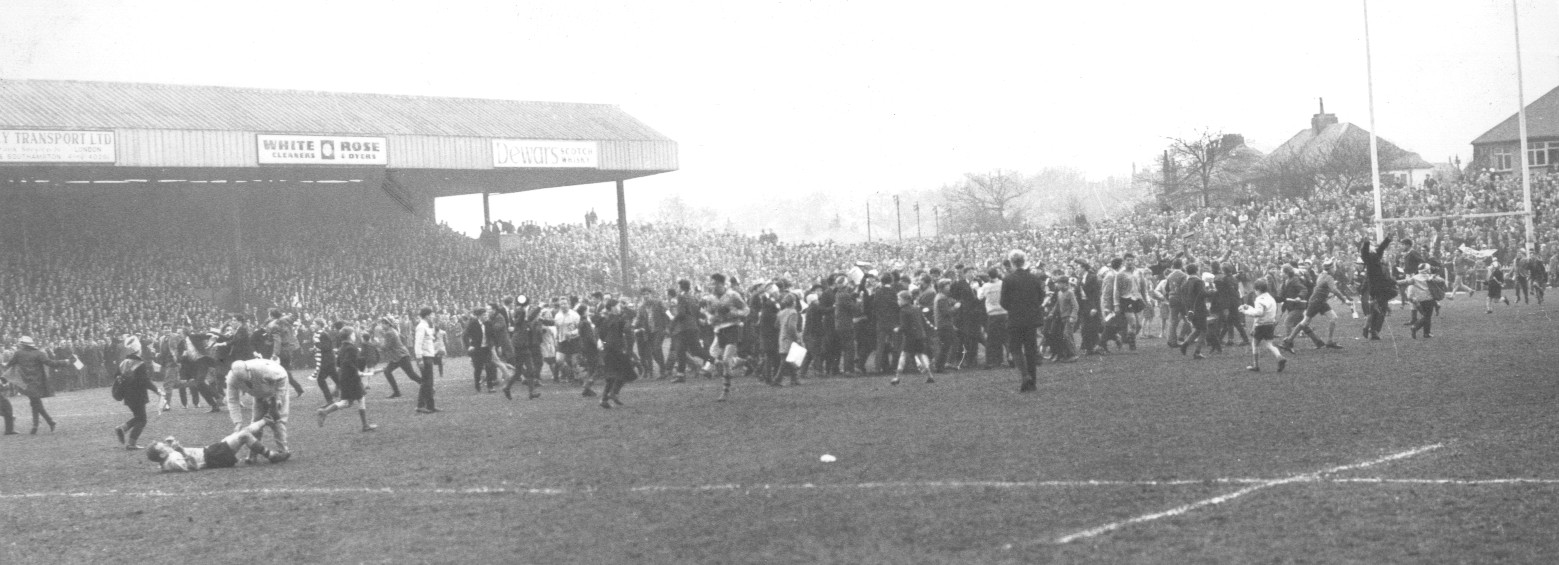
The crowd invade the pitch at Headingley after Len Mcintyre's dramatic late equalising drop goal.
1965
Floodlights at Watersheddings
The first match played under the new floodlights at Oldham was an under 24 international between Great Britain and France. on October 20th 1965. Included in the GB line-up were the Oldham players Kevin Taylor and Bob Irving.
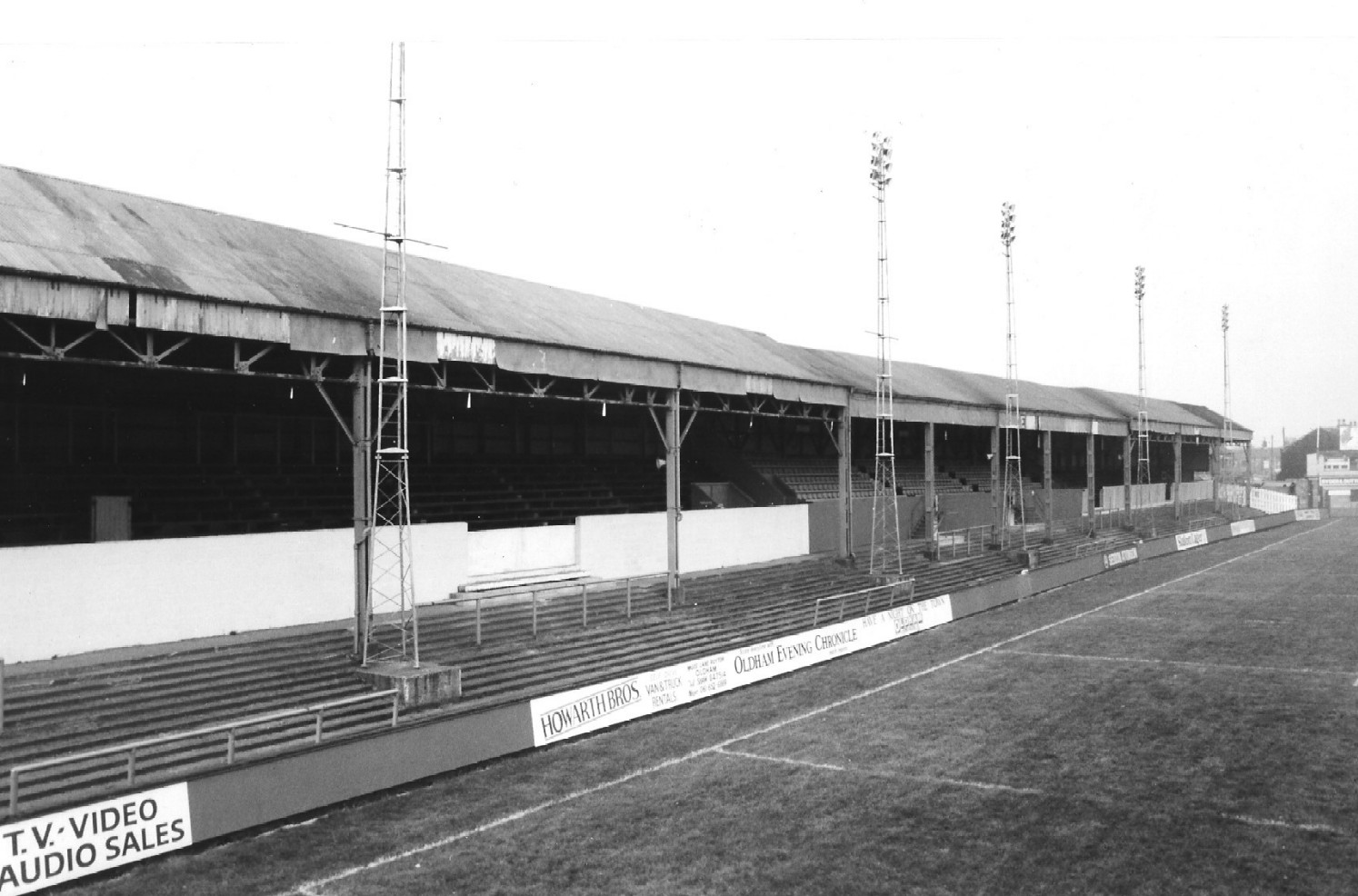
The newly installed floodlights on the Herbert Street side at Watersheddings.
1966
Lancashire Cup Final
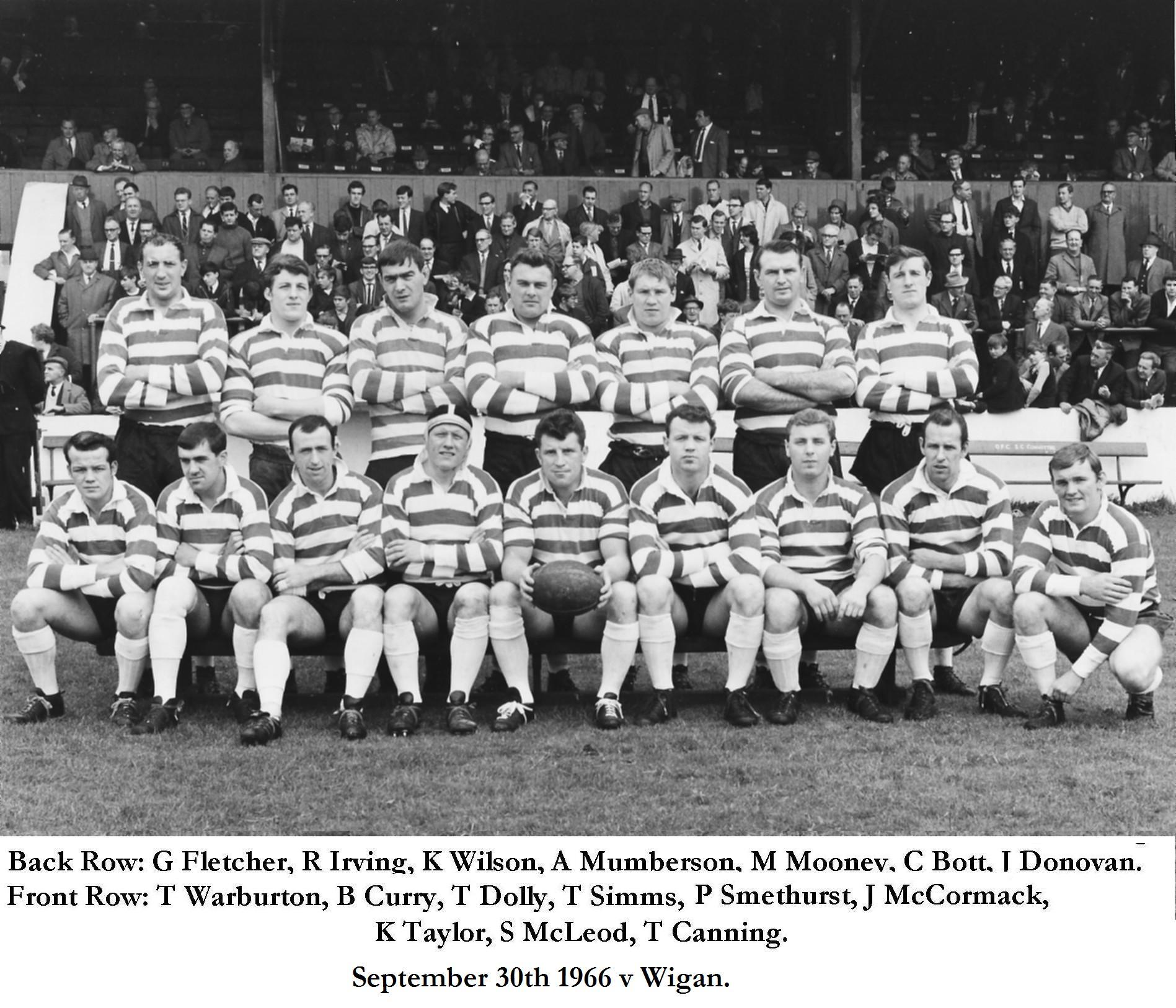
Oldham reached the Lancashire Cup Final only to lose narrowly 16 - 13 to Wigan. It was nearly a different story as in the very last minute, full-back, Stan McLeod was stopped literally inches from the tryline under the posts.
The Oldham squad for the 1966 Lancashire Cup Final
1967
Martin Murphy
On December 17th 1966 teenage full-back Martin Murphy had a baptism of fire on his debut against his home town club, Leigh. "Murph" had to leave the field to have stitches after a crunching tackle but, typical of the man, he returned to finish the match.
By the end of the season in 1967 Martin was well established in the first team and would go on to create a post-war record of 462 appearances.
Oldham won through to the final of the Lancashire Cup inspired by the excellent form of skipper Geoff Fletcher and the match against St Helens was keenly anticipated. Disaster struck when the game was finely poised at half-time, with Oldham 2–0 in front, Fletcher stayed in the dressing room after the interval having sustained a fractured hand.
Also, the other prop Ken Wilson had suffered a painful shulder injury but gallantly carried on. The depleted Roughyeds were then run off their feet with the Saints going on to a 30–2 victory.
Disastrous season but tour recognition for Bob Irving
A devastating season for the Oldham faithful saw the Roughyeds plummet to the bottom of the league. Only a narrow win over Batley in the last match of the season kept Oldham off the bottom spot.
However, in spite of this, Bob Irving was selected to go on the 1970 tour. The fact that Bob still managed to receive the GB call-up in such circumstances say much about the effort and enthusiasm of the man in the Roughyeds' cause.
Oldham did somewhat better at the start of the 1970s but the improvement was strongly enhanced in January 1972 withe signing of Frank Foster.
A ball playing prop-forward of the highest quality, added to a good kicking game and ferocious defence, he was just what Oldham needed and transformed the team.He made his debut at Whitehaven on January 15th after which 12 of the remaining 13 league matches were won. The one reverse being a last minute defeat at Warrington.
Although he only had a brief career at Watersheddings, prop forward Terry Clawson was selected for Great Britain for the 1973 sereis against the 'Kangaroos'. A powerful individual, Terry was also a good goal kicker and carried out those duties for the national team. He retained his place to be selected for the 1974 tour.
After the flurry of success at the end of the 71-72 season, the Roughyeds flattered to deceive for the rest of the decade but as the 1970s drew to a close Oldham brought out a lottery scatch card which became a sensation!
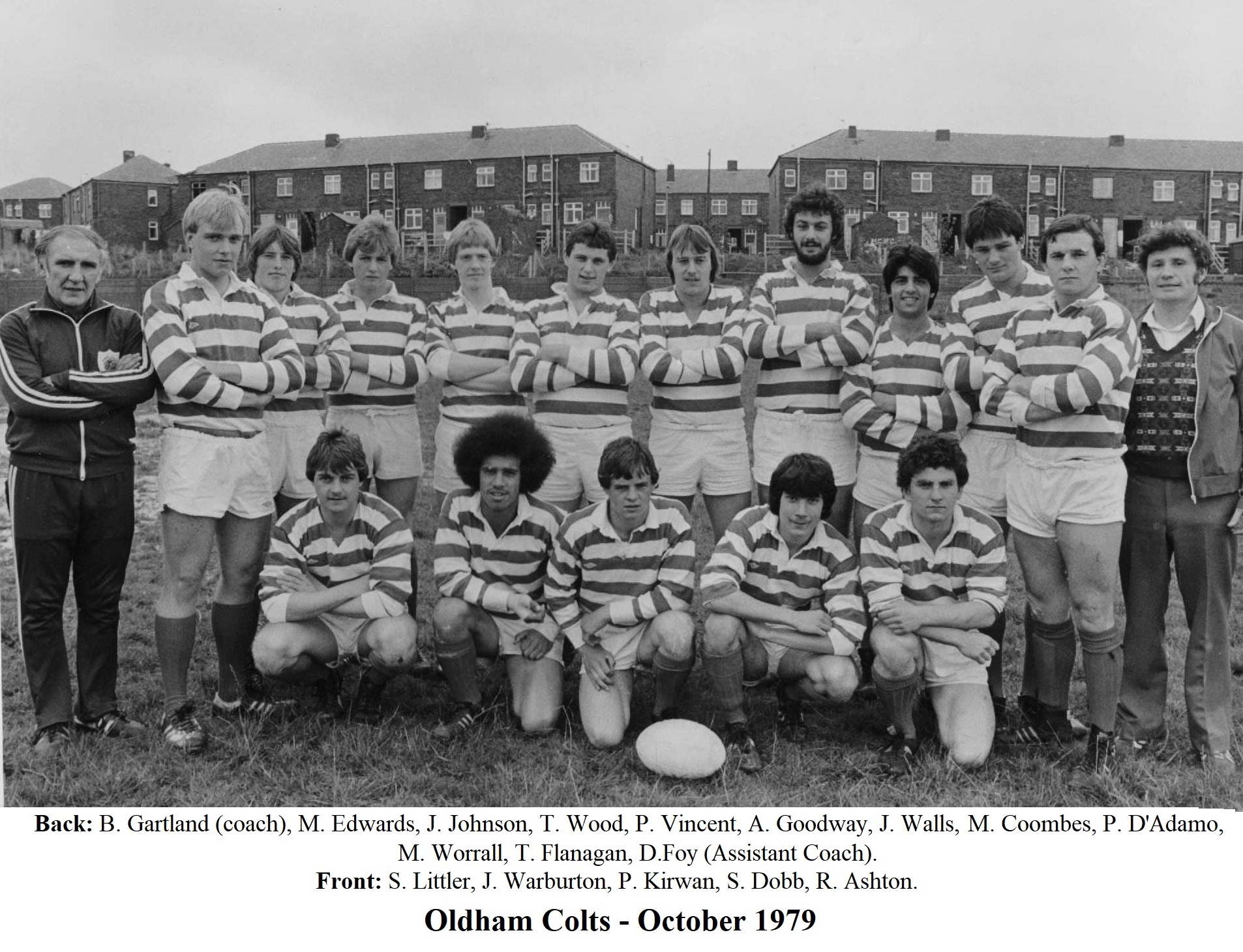
The increased revenue that came with it was put to good use in the assembly of a star studded colts team. Once again the rest of the league were taking note of the activites at Watersheddings on and off the field.
After something of a yo-yo period during the 1970s, the club began to reap the benefit of the colts success at the turn of the decade as a number of the young players found their way into the senior side to good effect. Terry Flanagan became the club's youngest ever captain at 19 and with the likes of Ray Ashton, Mick Worrall, Paddy Kirwan and Andy Goodway all making an impression in the first team. The future looked bright as the club stormed to the second division championship in 1981-82 during which Mick Parrish became the first and so far only player to play and score in every match in a season.
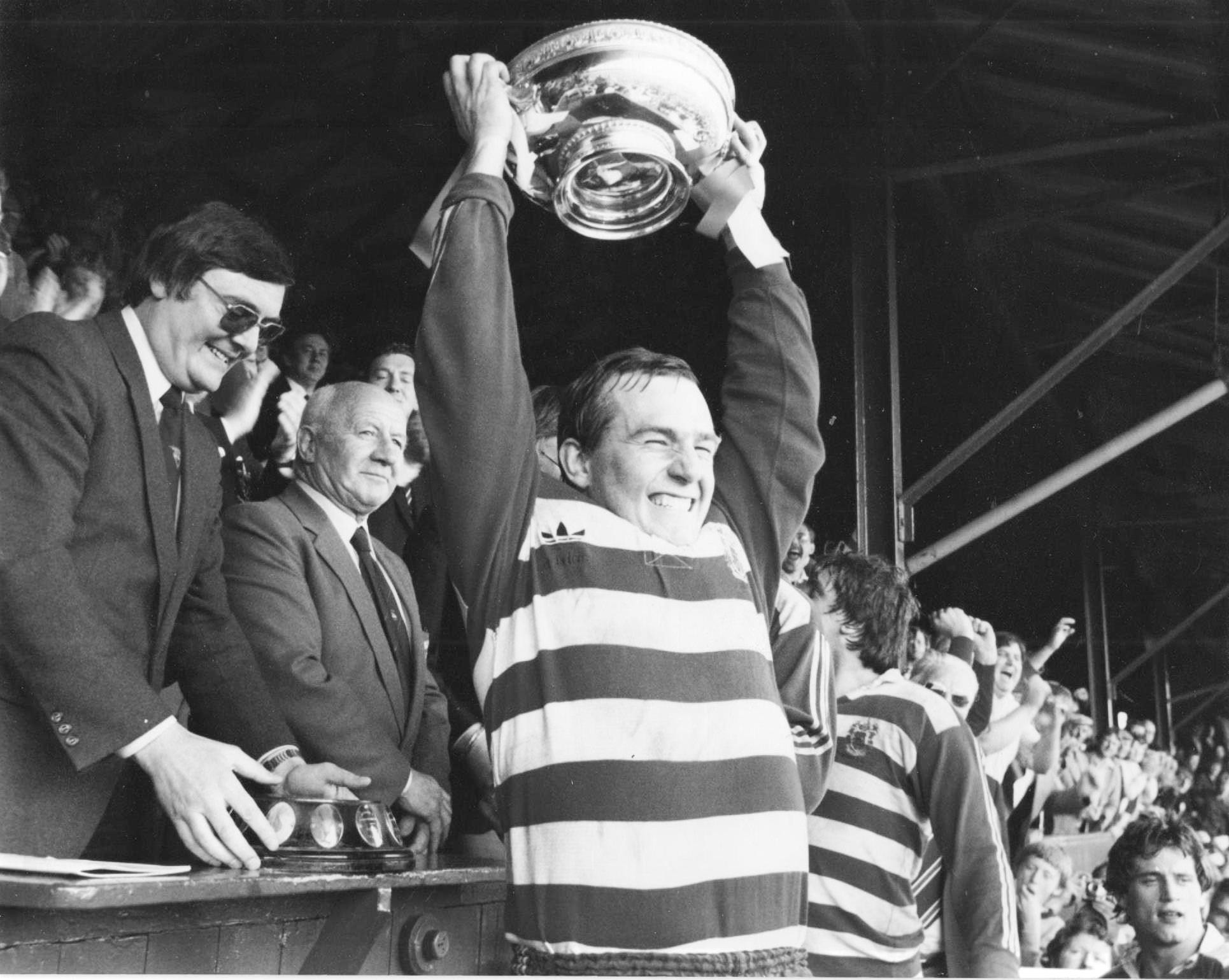
Terry Flanagan celebrates with the second division champions trophy in 1982.
1984
Five players selected for the 1984 tour
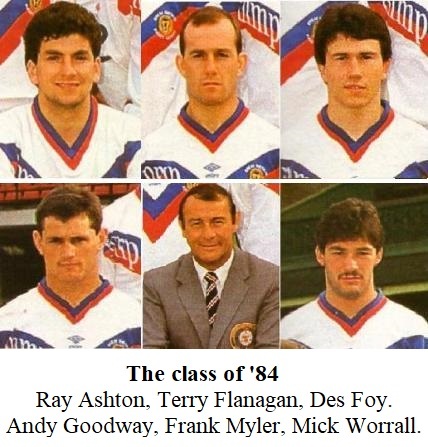
A record five Oldham players were selected for the 1984 tour Des Foy was now also in the ranks and he along with ex-colts stars; Flanagan, Ashton, Worrall and Goodway were all chosen by the GB (and Oldham) coach Frank Myler.
Oldham had recruited some quality Australian players, notably Mal Graham, Gary Warneke and the lightning fast David Liddiard whose superb try in the quarter final against Bradford set up the first semi-final in over 20 years. However, in the match against Castleford, the luck deserted the Roughyeds' full-back when a cruel bounce of the ball eluded the Oldham speedster to gift a try to the opposition which turned the match in the favour of 'Cas' who went on to win 18 - 7.
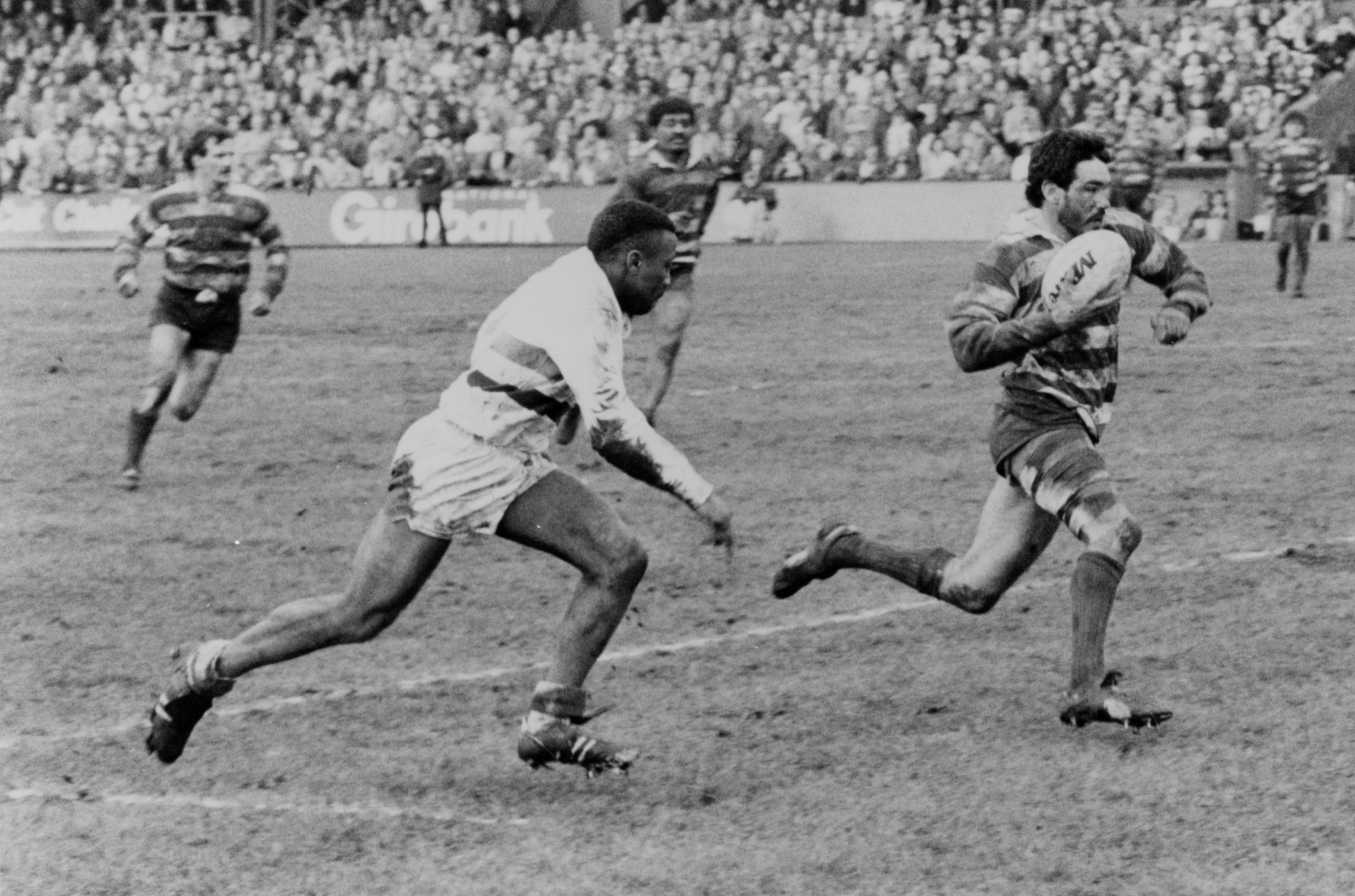
David Liddiard breaks clear to score the matchwinner in the Challenge Cup quarter final against Bradford.
1986– 1988
Highs and Lows
The 1986-87 season was peculiar for its 'highs and lows'. There was a first Lancashire Cup Final for 18 years, losing out to Wigan, a great game against the Kangaroos when Oldham put up the best performace of the whole tour against the invincible Aussies and a never to be forgotten, last minute, Challenge Cup victory over Wigan at Watersheddings. But the LOW was relegation! However, promotion was gained the next year and to cap it off there was more success with victory in the Second Division Premiership final in a pulsating match against Featherstone at Old Trafford.
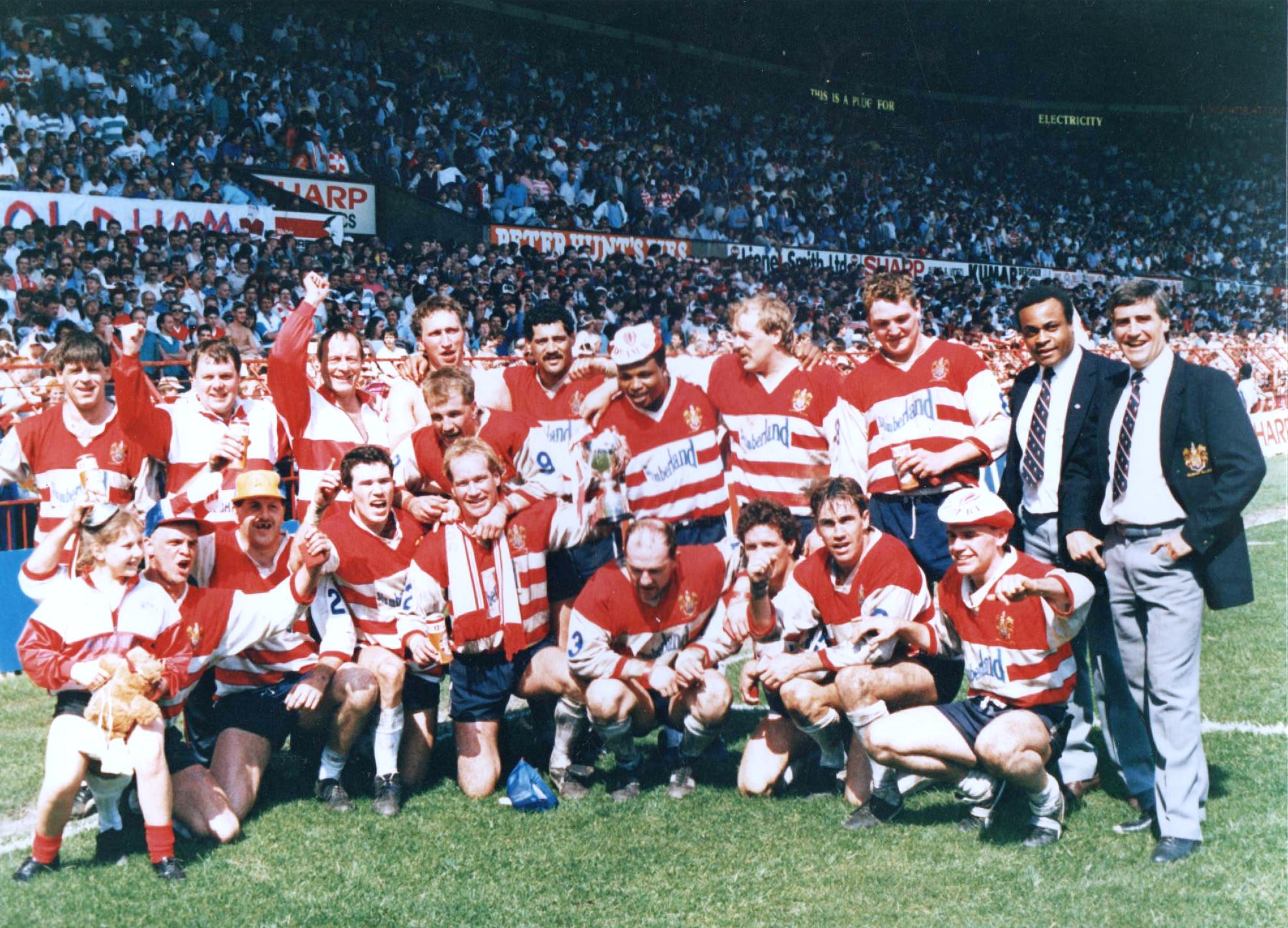
The team celebrate at Old Trafford after the dramatic victory over Featherstone Rovers.
1989
Oldham RLFC - Share issue
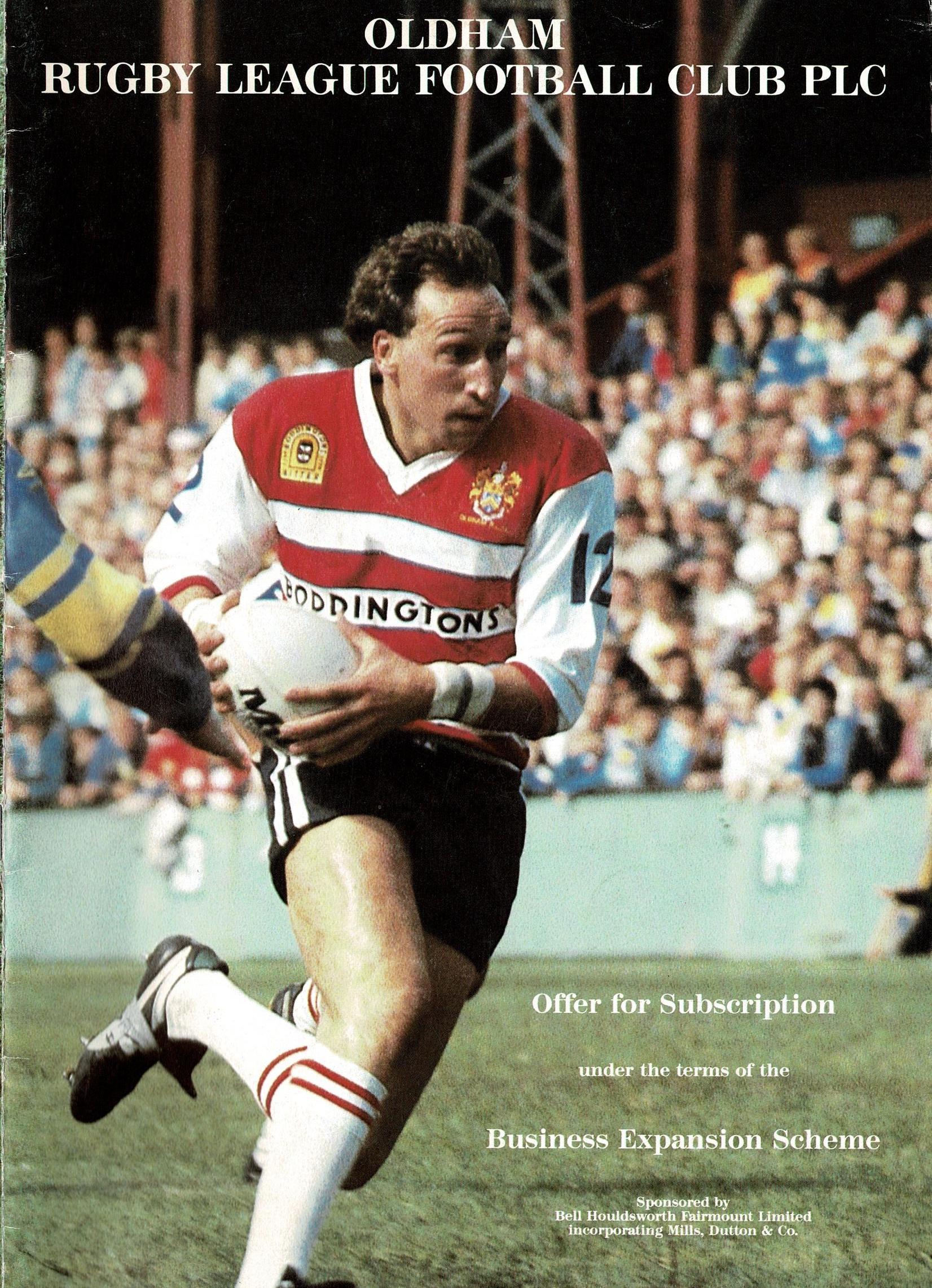
After the relegation in 1987 the yo-yo sequence resumed which led to the dramatic step of the club becoming a PLC with a glossy brochure produced to accompany the share issue in 1989.
The Brochure to accompany the share issue in January 1989.
1989– 1990
More glory at Old Trafford... and disappointment in the Lancashire and Challenge Cups
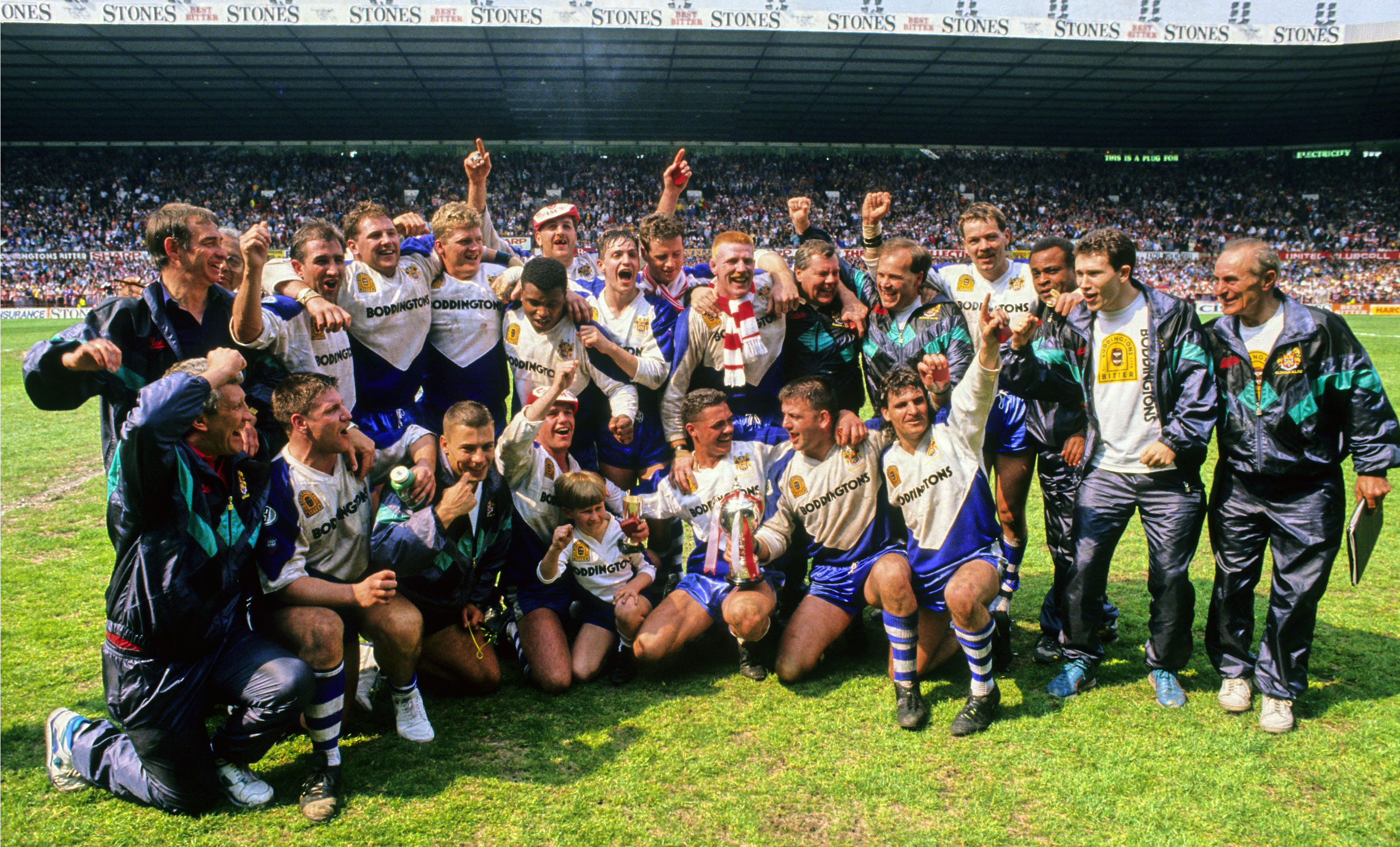
A successful season as Oldham once again triumphed in dramatic style at Old Trafford coming back from being 29 - 8 down early in the second half to win 30 - 29. However, another Lancs Cup final ended in defeat to Warrington who also ended the Wembley dream when a last minute try by Paul Lord in the semi-final, was controversially disallowed for offside.
Oldham celebrate their amazing comeback victory over Hull KR at Old Trafford.
1990s
4 events
1992
No promotion and defeat at Old Trafford
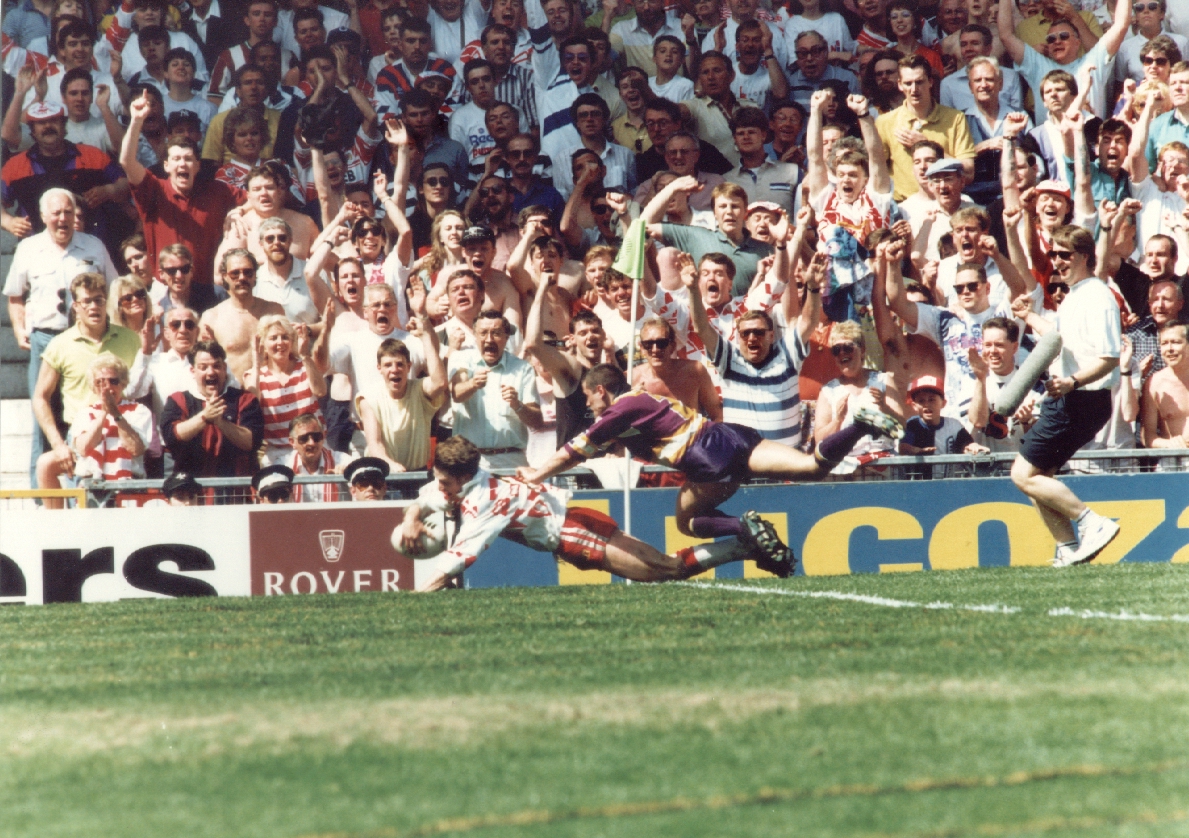
Oldham reached the 2nd Division Premiership Final for a third time but this time there was no happy ending as Sheffied Eagles emerged victorious 34 - 20. Worse was the fact that Oldham finished third in the table and thus missed promotion.
Scott Ranson scores a fabulous try in the 1992 defeat to Sheffield at Old Trafford.
1993– 1997
Back into the first division, 'Super League' and liquidation!
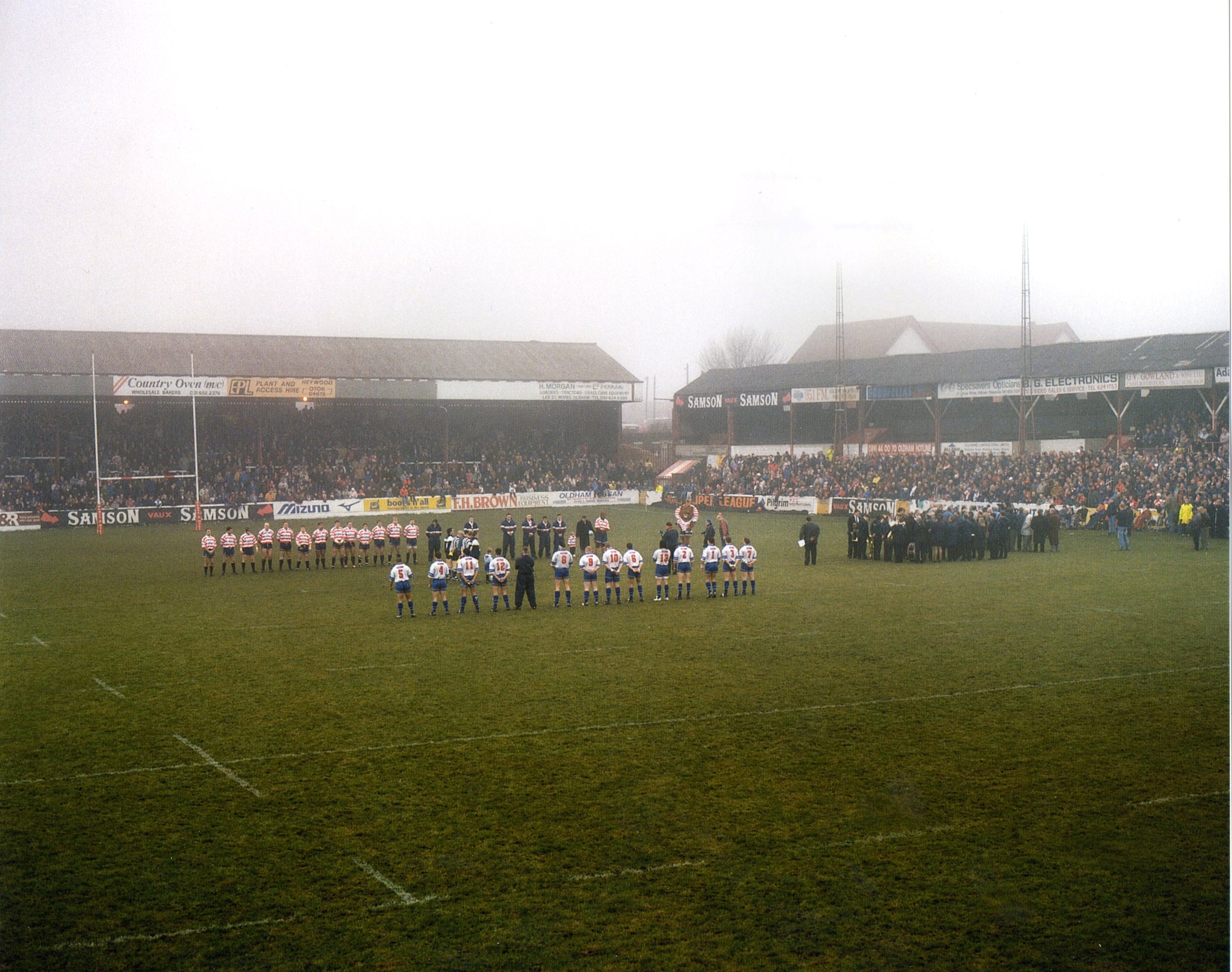
Promotion was gained in 1993 and at the close of the 1994-95 season Oldham finished in tenth place in division one just securing a place in the newly organised 'Super League'. In 1996 the game switched to become a summer sport and Oldham defy the critics to retain their 'Super League' status. David Bradbury earned a place on the tour to New Zealand and Papua New Guinea. However, the following season Oldham are relegated and with spiralling debts which had already resulted in the sale of Watersheddings, the club goes into liquidation and is wound up in October 1997.
A cold winter day for the last match at Watersheddings against Swinton on January 19th 1997.
1998
Re-birth
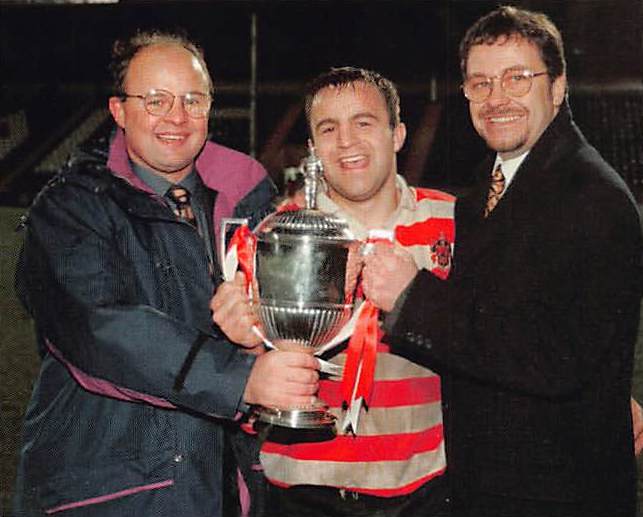
As the Oldham RL community descended into a pit of gloom, a four man consortium led by Chris Hamilton picked up the reins and strove to maintain the presence of a professional Rugby League club in the town. Local lad, John Hough was the first signing. After an emotionally charged first outing when the Law Cup was secured on New Years Day at Spotland, it soon became obvious that there was going to be no fairytale rise back to former glories. However, the name of Oldham RLFC had been preserved.
Coach, Paddy Kirwan, captain, Neil Flanagan and chairman, Chris Hamilton, celebrate the Law Cup win on New Year's Day 1998.
1998– 2000
A final, a struggle and consolidation
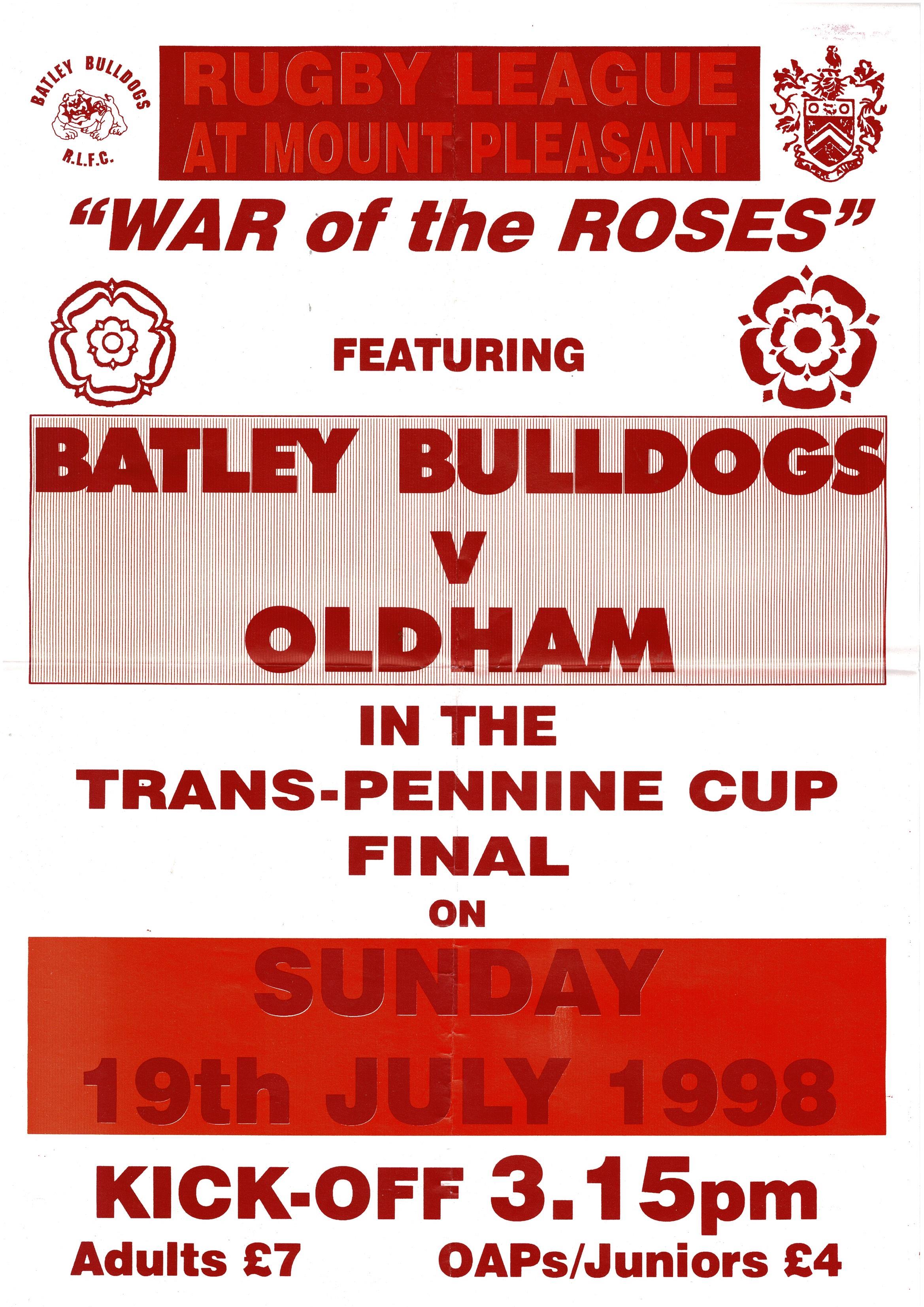
In that first,1998 season, Oldham did well to reach the Trans-Pennine Cup Final. The match was lost to Batley who had home advantage at Mount Pleasant but it was nevertheless a remarkable achievement for the revived club. The following season did not go so well with the Roughyeds finishing second bottom of the league but as the new century dawned some shrewd signings, especially the acquisition of Mike Ford as player coach, brought a vast improvement.
Promotional poster for the Trans-Pennine Cup Final.
2000s
4 events
2001
One game away!
After making it to the play-off semi-final the previous season, the Roughyeds went one better when they reached the final played against Widnes at Spotland. The 'Vikings' proved to be too strong on the day but the club had come a long way to be just the one game away from 'Super League'.
Jason Clegg makes the hard yards in the Play-off final.
2002
Decline
After the excitement of the 2001 campaign, Oldham's playing fortunes went into reverse, coinciding with a move from Boundary Park. One highlight was in the match at Doncaster on April 2nd 2002 when Chris Campbell scored right from the kick off after just 7 seconds. However, the decline continued until in 2006 every league match was lost which resulted in relegation to the third tier.
Chris Campbell, scorer of the fastest ever try in senior Rugby League.
2004
Heritage Trust Trophy
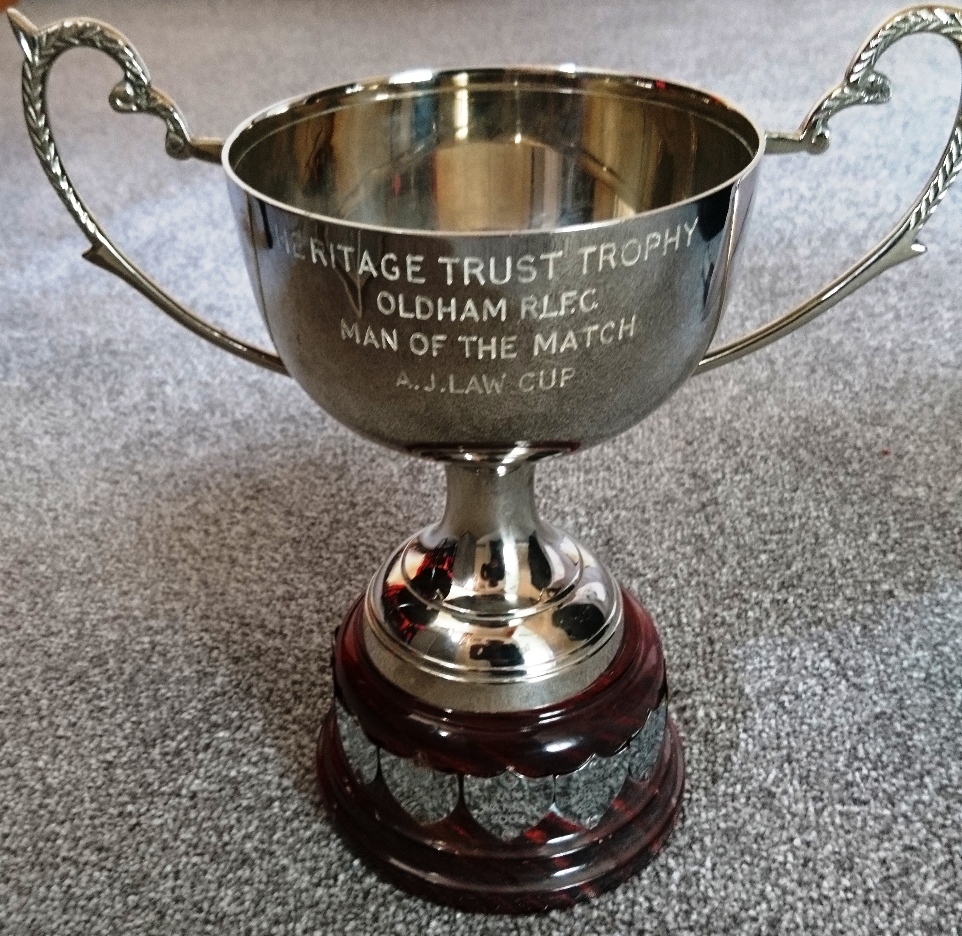
The Heritage Trust trophy was introduced to be awarded to the Oldham player of the match in the Law game against Rochdale. The first recipient was Ian Watson.
After the lows of 2006 there was an immediate improvement in the playing fortunes when Bill Quinn became the new chairman.
The club reached the third tier play-off final in 2007 - 08 - 09. However, all were lost to Featherstone, Doncaster and Keighley but at last Oldham had found a new home with the first match at Whitebank Stadium played on May 9th 2010. Unfortunately, York spoiled the party with a last minute winner and also beat the Roughyeds as Oldham fell at the last hurdle in their fourth consecutive play-off final.
Another play-off final defeat and the last match for Neil Roden
There was more play-off final disappointment in 2013 against Rochdale and this year also saw the last senior match for Neil Roden. Originally signed in 2000, Neil played 295 matches for the Roughyeds. Only John Hough has also achieved 200+ appearances in the 21st century.
Top appearance makers in the 21st century, Neil Roden and John Hough.
2014– 2015
More play-off disappointment before victory and promotion
There was yet another play-off final defeat in 2014 with a 'golden point' loss to Hunslet at Headingley. Promotion was eventually achieved when Keighley were defeated in a promotion play-off decider at a packed Whitebank in 2015. The downside was that playing at the higher level meant that the team had to play outside of the Borough the following year.
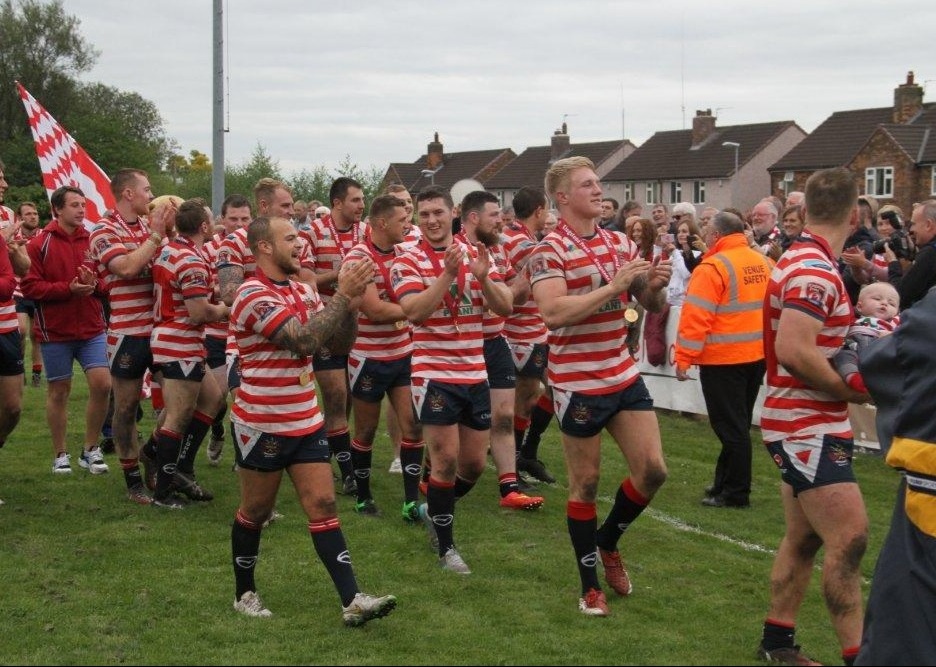
The Oldham players celebrate their promotion play-off victory over Keighley at Whitebank.
2015
Record for 'points in a match'
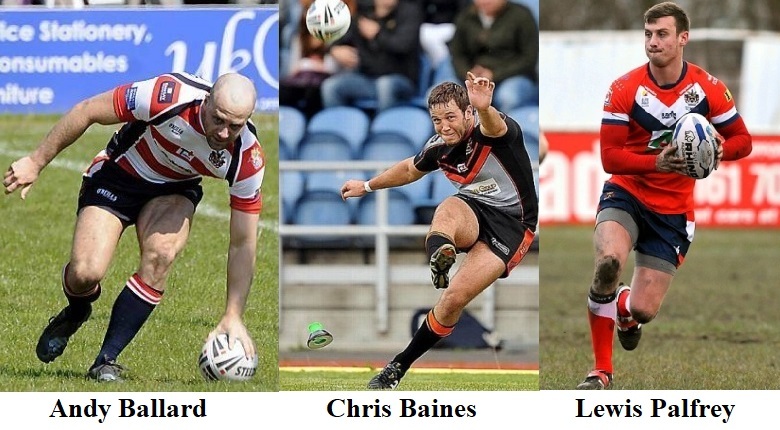
On the way to their promotion push, the points in a match record was equalled for the third time. The then captain Lewis Palfrey scored 34 in the match at Hemel Hempstead. This figure had already been achieved by Andy Ballard and Chris Baines both within a few months of each other in 2009.
Oldham shocked the Rugby League world when they defeated Hull KR at Craven Park. No one gave the freshly promoted Roughyeds a chance against the previous year's beaten Wembley finalists. However, the Robins had no answer to a determined Oldham side who deservedly won 36 - 22.
Out of town...relegation... back to Whitebank... promotion
As they had to in 2015, Oldham had to play 'out of town' to comply with the Championship ground minimum standards and so Bower Fold, Stalybridge became the home venue but after relegation in 2017, promotion was achieved again when Newcastle were defeated 18 - 14 in a tense promotion play-off match at Whitebank in 2019.
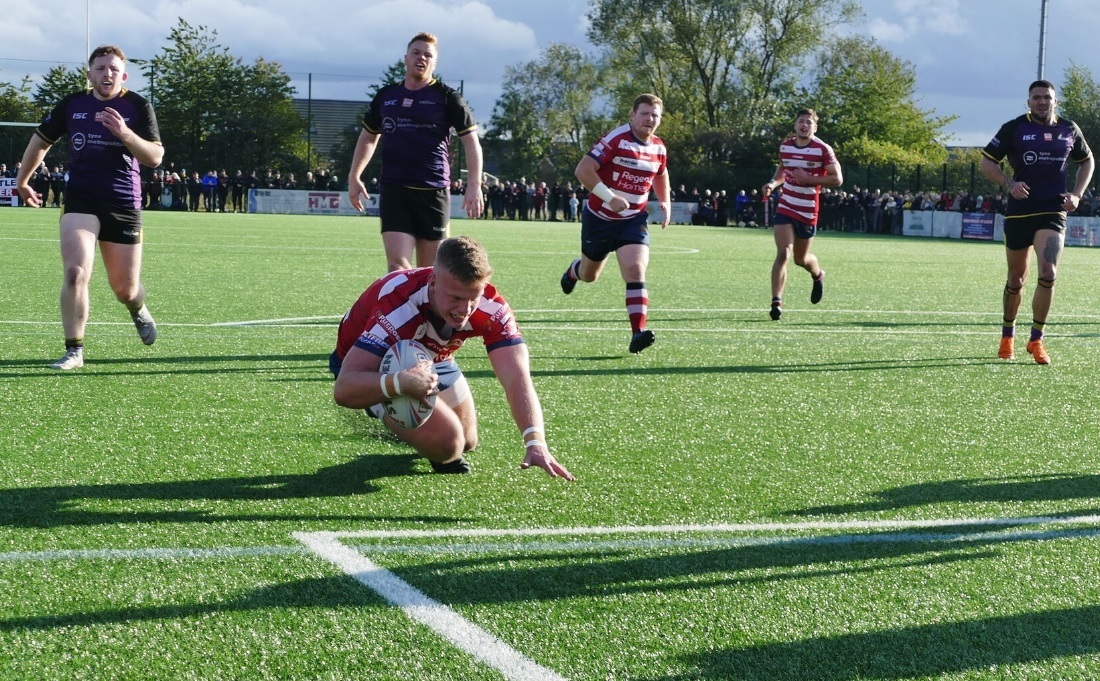
Jimmy Beckett scores the match-winning try in the promotion final against Newcastle in 2019.
2020s
5 events
2020– 2022
Covid virus disruption
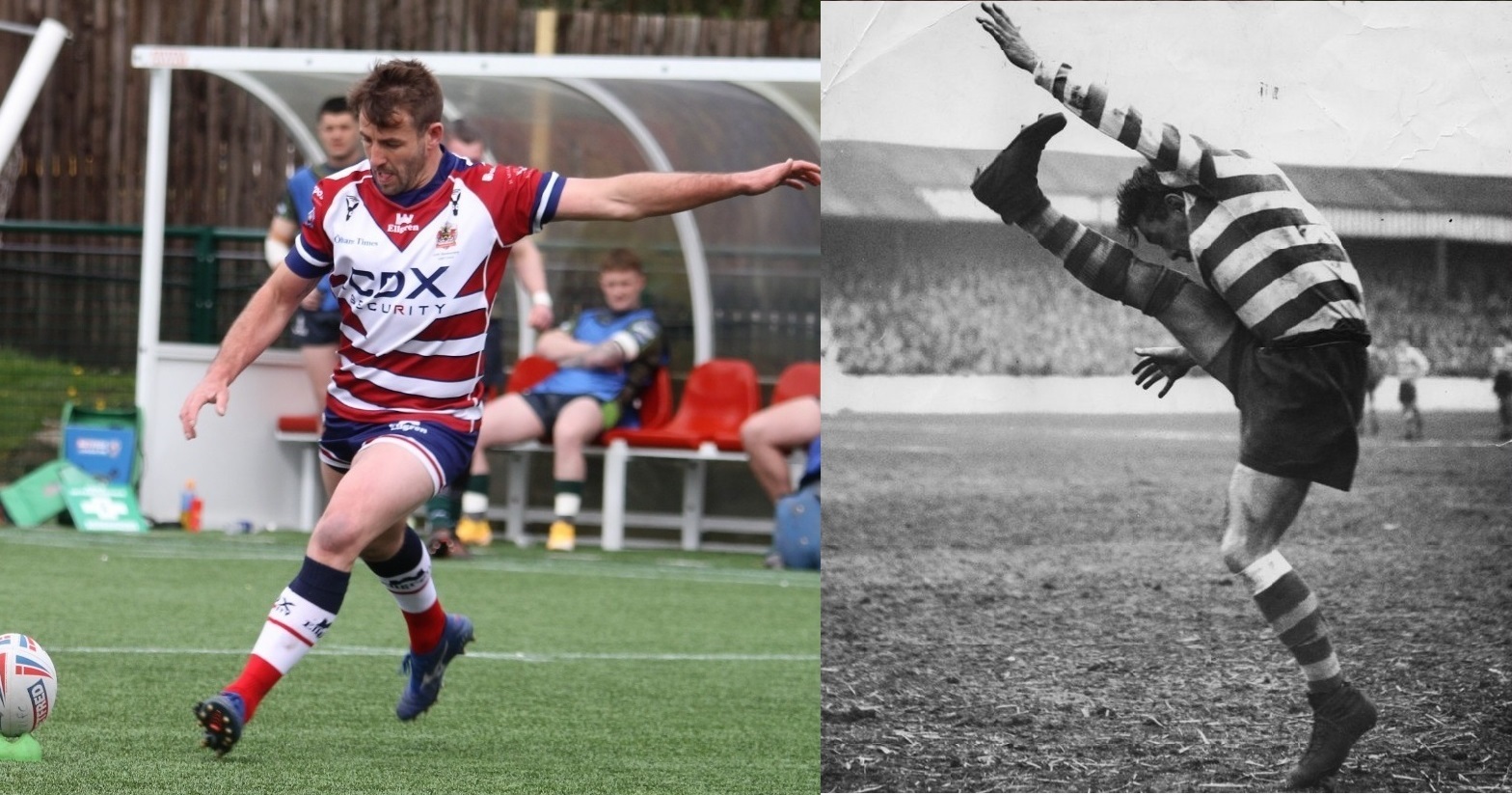
After the 'Covid' curtailed season in 2020, Oldham struggled in the Championship and were relegated in 2021. There was a moment of glory for skipper, Martyn Ridyard when he equalled the 'goals in a match' record with 14 against West Wales in April 2022. The record had stood for 63 years and one week since the great Bernard Ganley did the same against Liverpool in April 1959.
Martyn Ridyard slots over one of his 14 goals against West Wales in April 2022 and Bernard Ganley knocks one over in the 1950s.
2023
New Owners for the club
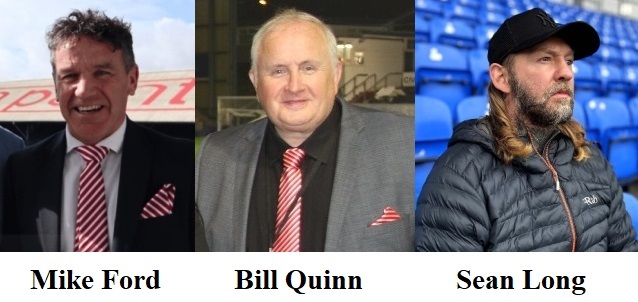
After over 25 years under the control of Chris Hamilton, new owners purchased the club in 2023. Led by former player and coach, Mike Ford, the new regime took charge with the new season barely under way, on March 22nd 2023. Then on May 5th it was announced that Bill Quinn was back on board as club chairman and in October the club landed a major coup when Sean Long was named as head coach.
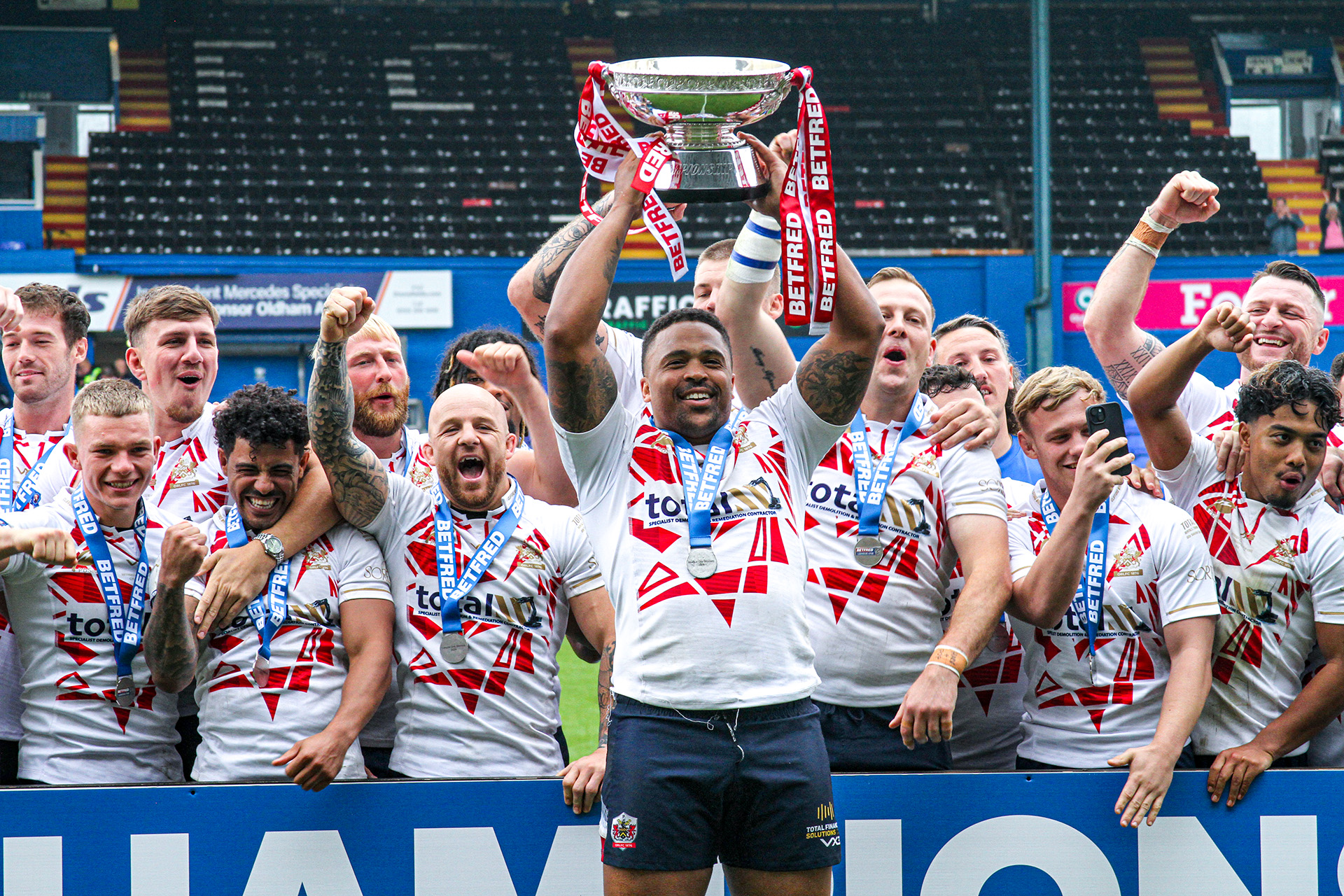
The 2024 season was a remarkable success for the club who finished clear leaders of League One to become deserved champions therefore gaining promotion to the Championship for 2025.
Kieran Dixon broke the points in a match record with 36 (3 tries – 12 goals) in the match against Newcastle on August 11th.
Cian Tyrer’s 29 tries is the best in a season since Paul Lord got the same number in 1989-90.
The club record for ‘points in a match’ was broken on Sunday August 11th 2024 in the 84 – 0 victory over Newcastle when newly signed wingman Kieran Dixon scored 3 tries and 12 goals to register 36 points.