Born locally in Moorside, Phil played for the Werneth club before switching codes and going to play for Oldham Rugby Union. His good form down at Keb Lane made the more senior clubs take notice and before his arrival at Watersheddings he had played for Broughton Park, Manchester, Loughborough College and Sale, picking up Lancashire county recognition along the way.
His debut for Oldham came in a pre-season friendly against Blackpool when he immediately endeared himself to the home fans by scorching 60 yards up the touchline for a super try. Phil is one of the few players to have scored most tries/goals in a season, three times finishing top try scorer and on four occasions being best goal kicker, although never both in the one season.
He passed the century mark of goals in 1971-72 and 1972-73. His consistency on keeping the scoreboard ticking over made him the most prolific “three-quarter” points scorer in the history of the club.
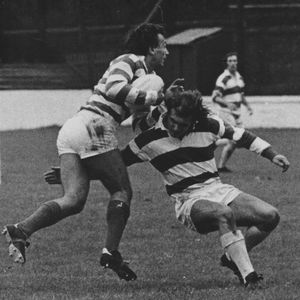
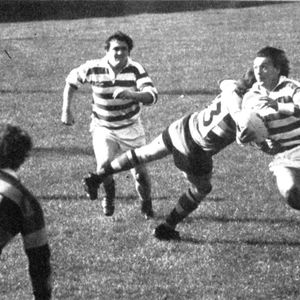
Although he played occasionally on the wing, the great majority of his games were at centre, with the Larder/Elliott wing partnership enjoying much success in what was to prove to be a most enduring and productive three-quarter pairing.
His last appearance for Oldham came against Featherstone on September 14th 1980 by which times he had played 328 times for the Roughyeds scoring 111 tries and 475 goals for a total of 1,283 points which puts him third on the all time list for the club. Only Bernard Ganley and Tommy Rees have scored more.
Phil was appointed director of coaching at the RFL in 1982. He wrote the Rugby League Skills Manual, published in 1983 and The Rugby League Coaching Manual, published in 1988 and subsequently went on to have spells in charge at Widnes, Keighley and Sheffield before becoming involved in the Great Britain set-up and was the coach to the England team in the 1995 World Cup and although they beat Australia in the first match of the tournament they eventually lost to the Kangaroos in the final.
He switched to Rugby Union in 1997 becoming the defence coach for England and was still there in 2003 when they won the Grand Slam and the World Cup. He was awarded the MBE in the 2004 New Year’s Honours List for services to Rugby Union. Phil was inducted into the Oldham RL Hall of Fame on January 19th 2025.

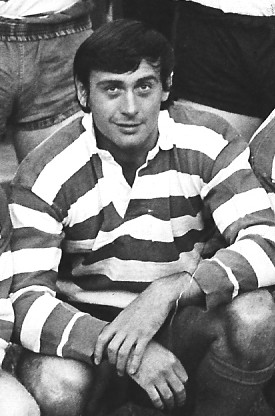
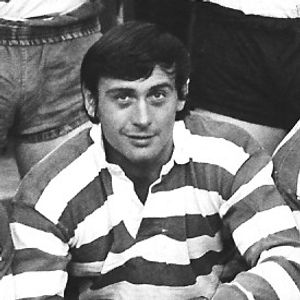
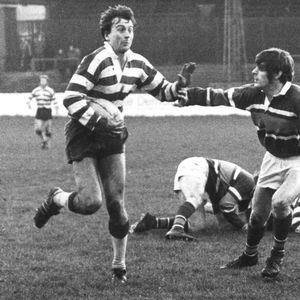
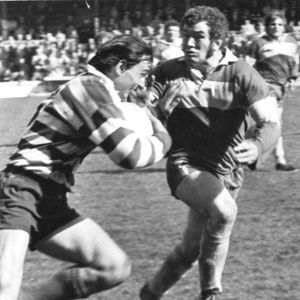
Player profile
Born locally in Moorside, Phil played for the Werneth club before switching codes and going to play for Oldham Rugby Union. His good form down at Keb Lane made the more senior clubs take notice and before his arrival at Watersheddings he had played for Broughton Park, Manchester, Loughborough College and Sale, picking up Lancashire county recognition along the way.
His debut for Oldham came in a pre-season friendly against Blackpool when he immediately endeared himself to the home fans by scorching 60 yards up the touchline for a super try. Phil is one of the few players to have scored most tries/goals in a season, three times finishing top try scorer and on four occasions being best goal kicker, although never both in the one season.
He passed the century mark of goals in 1971-72 and 1972-73. His consistency on keeping the scoreboard ticking over made him the most prolific “three-quarter” points scorer in the history of the club.
Although he played occasionally on the wing, the great majority of his games were at centre, with the Larder/Elliott wing partnership enjoying much success in what was to prove to be a most enduring and productive three-quarter pairing.
His last appearance for Oldham came against Featherstone on September 14th 1980 by which times he had played 328 times for the Roughyeds scoring 111 tries and 475 goals for a total of 1,283 points which puts him third on the all time list for the club. Only Bernard Ganley and Tommy Rees have scored more.
Phil was appointed director of coaching at the RFL in 1982. He wrote the Rugby League Skills Manual, published in 1983 and The Rugby League Coaching Manual, published in 1988 and subsequently went on to have spells in charge at Widnes, Keighley and Sheffield before becoming involved in the Great Britain set-up and was the coach to the England team in the 1995 World Cup and although they beat Australia in the first match of the tournament they eventually lost to the Kangaroos in the final.
He switched to Rugby Union in 1997 becoming the defence coach for England and was still there in 2003 when they won the Grand Slam and the World Cup.
He was awarded the MBE in the 2004 New Year’s Honours List for services to Rugby Union.
Phil was inducted into the Oldham RL Hall of Fame on January 19th 2025.